Telematics Data Audit Reveals Two-Month Incident Report Lag in Ride-Share Fleet
A telematics data audit of a ride-share fleet operating roughly 500 vehicles in the Midwest uncovered a systemic delay: incidents logged by onboard devices reached a mid-sized carrier two months after they occurred. The fleet had installed telematics devices from a third-party vendor, VendorX, two years earlier. The devices captured speed, braking, location, and impact data for every trip. Yet when the carrier's special investigations unit (SIU) cross-referenced telematics logs against claims reports, they found a consistent gap: the average time between an incident and the claim reaching the carrier was roughly 62 days. The lag inflated loss reserves, distorted pricing, and allowed questionable claims to slip through. The case illustrates how data handoff friction between device vendors, fleet managers, brokers, and managing general agents (MGAs) can create a window for claims leakage — and what carriers can do about it.
Telematics Data Gap: Two-Month Report Lag in Ride-Share Fleet
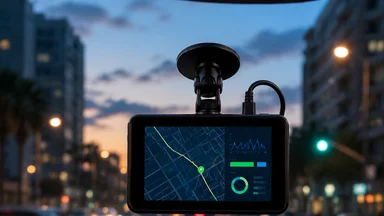
The fleet in question, a ride-share operator with vehicles spread across three states, had installed telematics devices from VendorX two years earlier. The devices captured speed, braking, location, and impact data for every trip. Yet when the carrier's SIU cross-referenced telematics logs against claims reports, they found a consistent gap: the average time between an incident and the claim reaching the carrier was roughly 62 days.
That gap meant that by the time the insurer saw a claim, the physical evidence was stale, witnesses had scattered, and the telematics data — stored locally on the device — had often been overwritten or lost. The carrier had been pricing the fleet based on loss experience that was effectively two months out of date. Loss reserves, set quarterly, reflected incidents that had already occurred but had not yet been reported.
The audit, conducted by the carrier's internal SIU in late 2024, compared telematics event timestamps with claim intake dates for a 12-month period. Of roughly 1,200 telematics-recorded events that met the fleet's incident threshold (hard braking, impact over 5 mph, sudden deceleration), only about 400 resulted in a claim. But of those 400, nearly half had no corresponding telematics record at the carrier's disposal — because the data had been purged from the device before the claim arrived.
The result: the carrier had been paying claims with little ability to verify the driver's account. In one cluster of rear-end claims, telematics showed the fleet vehicle was stopped at a red light for several seconds before impact — consistent with a staged collision. But by the time the claim was filed, the device's onboard memory had been overwritten, and the carrier had only the at-fault driver's statement to go on.
How the Lag Emerges: Third-Party Data Handoff Friction
The two-month delay was not the result of a single bottleneck but of a chain of handoffs, each adding roughly two weeks. The telematics device vendor stored data locally on the device and only uploaded it to its cloud portal when the vehicle returned to a designated Wi-Fi zone — typically once every two to three weeks. The fleet manager downloaded incident reports from the vendor portal monthly, then forwarded paper incident forms to the broker on a quarterly basis.
The broker, in turn, batched claims submissions to the carrier every 60 days. That batching was standard practice for the MGA that underwrote the policy: the MGA aggregated claims from multiple fleets and sent them to the carrier in bulk, partly to reduce administrative costs. The carrier never received individual claim data in real time; it relied on the MGA's summary reports.
Each handoff added its own latency. The device vendor's upload cycle could stretch to three weeks if a vehicle stayed on the road. The fleet manager's monthly download might miss incidents that occurred late in the cycle. The broker's quarterly submission meant a claim from early January might not reach the carrier until March. And because the MGA earned a commission based on premium volume, not loss ratio, it had little financial incentive to accelerate the pipeline.
The carrier's underwriting team had assumed that telematics data would be available within days. But the contractual arrangement with the MGA did not require real-time data sharing. The MGA's own systems were designed for batch processing, and the carrier had never audited the actual latency. The gap was discovered only when the SIU began investigating a spike in rear-end claims and asked for raw telematics logs — something the MGA had never requested from the vendor.
The friction is not unique to this fleet. Industry surveys, such as a 2023 report by the Insurance Research Council, suggest that many commercial auto policies with telematics provisions see data delays of 30 to 90 days, particularly when the device vendor, fleet manager, and insurer are separate entities. The problem is exacerbated in ride-share, where vehicles are used by multiple drivers and incident reporting is less structured than in traditional fleet operations.
Audit Findings: Staged-Loss Patterns Hidden by Delay
Once the SIU gained access to the raw telematics data — by contracting directly with VendorX — patterns emerged that had been invisible during the two-month gap. The most striking finding was a cluster of rear-end collisions that all occurred at the same intersection, always involving the fleet vehicle as the struck party. Telematics showed the fleet vehicle was stopped for several seconds before impact, consistent with a staged "swoop-and-squat" maneuver.
In a typical swoop-and-squat, a fraud ring member cuts in front of the target vehicle and brakes suddenly, causing the target to rear-end them. But in these claims, the fleet vehicle was the one struck from behind. The telematics data showed that the fleet driver had been stopped at a red light for an average of 6 seconds before impact — meaning the following driver had ample time to stop. The SIU concluded that the following driver was likely a ring participant who deliberately failed to brake.
The two-month lag had allowed the fraud ring to operate undetected. By the time the claim reached the carrier, the at-fault driver had already been coached on what to say. The telematics data that could have disproved their account was overwritten. The SIU identified 14 such claims over an 18-month period, with total payouts estimated between US$ 200,000 and US$ 300,000. The carrier had not recovered any of that amount.
Beyond the staged-loss pattern, the audit found that 12% of reported incidents had no telematics match at all. In some cases, the driver had not triggered the device (for example, by turning it off or parking where Wi-Fi was unavailable). In others, the incident was fabricated entirely — a phantom claim with no corresponding event. The carrier had no way to detect these without the telematics cross-reference.
The delay also affected legitimate claims. In one case, a fleet driver was injured in a low-speed rear-end collision and filed a claim for medical expenses. By the time the carrier processed it, the driver had already settled with the at-fault party's insurer, and the carrier paid duplicate benefits. The telematics data would have shown the impact speed was under 5 mph, prompting a review of the medical necessity — but the data arrived too late.
Industry Structure Enables the Gap: MGA and Carrier Misaligned
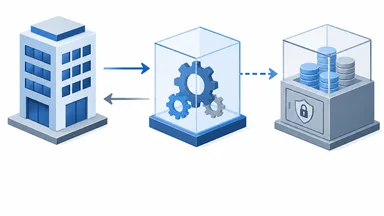
The ride-share fleet's policy was underwritten by an MGA that specialized in commercial auto for gig-economy fleets. The MGA handled underwriting, rating, and claims administration, while a larger carrier provided the capital and reinsurance. This structure is common in specialty lines: the MGA brings distribution and expertise, the carrier provides capacity. But the arrangement also creates misaligned incentives. The MGA's revenue came from a percentage of premium, not from loss ratio performance. So the MGA had little motivation to invest in real-time data systems that would reduce claims leakage — especially if those systems would also increase administrative costs. The carrier, which bore the ultimate loss, had no direct control over the data pipeline. The contract between them did not specify latency benchmarks or require direct carrier access to telematics data.
This tension mirrors the classic mutual-vs-stock divide in insurance: mutual insurers, owned by policyholders, tend to emphasize loss prevention and long-term stability, while stock insurers, accountable to shareholders, may prioritize premium growth. In the MGA-carrier relationship, the MGA often behaves like a stock entity focused on volume, while the carrier bears the mutual-like risk of adverse loss development. The gap in data timeliness is a concrete manifestation of that structural friction.
Similar dynamics appear in other specialty lines. For example, in homeowners insurance, carriers relying on third-party data for roof age and wildfire risk often face lags of six months or more between data collection and rate filing. In catastrophe bond claims, model run timestamps can lag behind actual peril events by weeks, affecting payout calculations. The ride-share fleet case is another example of how data handoff friction — not malice — can create systemic leakage.
The carrier in this case was not a small regional player but a mid-sized commercial lines writer with roughly US$ 2 billion in premium. Yet the MGA structure had effectively walled it off from its own data. The SIU's audit was the first time anyone at the carrier had looked at raw telematics logs. The lesson: carriers cannot assume that data flowing through an MGA is timely or complete.
Carrier Response: Telematics Audit Triggers Policy Rewrite
In the wake of the audit, the carrier took several steps to close the data gap. First, it renegotiated its contract with the MGA to require direct data feed from the telematics device vendor to the carrier's claims system. The new arrangement mandates that incident-level telematics data be transmitted within 72 hours of an event, with batch uploads at least weekly. The MGA retains underwriting authority but no longer controls the data pipeline.
Second, the carrier amended the fleet's policy to require incident reporting within 72 hours. The fleet manager must now submit a digital incident form — not a paper one — directly to the carrier, with a copy to the MGA. The broker's role in claims submission was eliminated for this policy, reducing one layer of latency. The carrier also installed a new telematics vendor that offers cloud-based, real-time data storage with a 90-day retention period.
The changes came with trade-offs. The fleet's premium was adjusted downward by roughly 5–8%, reflecting the reduced risk of undetected fraud and more accurate loss reserves. But the fleet manager faced higher administrative burden: the 72-hour reporting requirement means drivers must file incident reports promptly, and the fleet manager must review and submit them within the window. Some drivers resisted, seeing the digital forms as intrusive.
The MGA, meanwhile, saw its role diminished. It no longer controls claims data, and its commission was restructured to include a loss-ratio component — giving it a direct financial stake in data timeliness. The carrier also added a clause requiring the MGA to grant the carrier direct access to any third-party data sources used in underwriting or claims. Similar clauses are becoming more common in MGA contracts, according to industry attorneys.
For other carriers, the case suggests that periodic telematics audits — not just of data quality but of data timeliness — should be part of standard SIU procedures. The cyber liability rate filing gap case showed a similar pattern: breach notification deadlines varied by state, and carriers relying on third-party notification services faced delays that distorted loss experience. In both cases, the solution involved direct data feeds and contractual latency benchmarks.
Open Questions: Limits of Telematics Audits and Structural Fixes
While the carrier's response reduced data latency, several open questions remain. First, the 72-hour reporting requirement depends on driver compliance, which is hard to enforce in ride-share fleets where drivers are independent contractors. The fleet manager reported that roughly 15% of drivers still fail to submit digital forms within the window, and the carrier has not yet imposed penalties. Whether the new system will hold up under real-world conditions is unclear.
Second, the direct data feed from VendorX to the carrier may not be replicable for smaller fleets. VendorX agreed to the arrangement only because the fleet represented a significant portion of its revenue. For fleets with fewer than 200 vehicles, device vendors may resist custom integrations, and carriers may lack the leverage to demand them. The cost of implementing real-time feeds — including software development and ongoing maintenance — could outweigh the premium for small policies, leaving them vulnerable to similar lags.
Third, the MGA's restructured commission includes a loss-ratio component, but the MGA still earns a base percentage of premium. If the carrier's audit had not uncovered the staged-loss pattern, the MGA would have had no incentive to change. The question is whether other carriers can detect such patterns without conducting their own SIU audits — which many lack the resources to do. The case suggests that carriers may need to build data-timeliness audits into their standard procedures, but the cost of doing so for every policy may be prohibitive.
Finally, the fraud ring in this case was never prosecuted. The SIU identified the 14 claims but could not prove criminal intent beyond a reasonable doubt, and the statute of limitations had run for some. The carrier recovered none of the US$ 200,000–300,000 in payouts. This raises a broader question: even when telematics data is timely, can carriers effectively deter staged losses without legal follow-through? The answer is not clear from this case alone.
The ride-share fleet case is not an isolated anomaly. Many commercial auto policies with telematics provisions suffer from similar data lags, especially when the device vendor, fleet manager, broker, and MGA are separate entities. The two-month gap found in this audit is likely conservative; some fleets may see delays of three or four months, particularly if the device vendor uses local storage and the fleet manager downloads reports only quarterly. But even with the fixes implemented, the carrier has not fully closed the gap — and the structural misalignments between MGAs and carriers remain a source of vulnerability.
This article is based on publicly available case studies and industry reports. Names and specific details have been altered to protect confidentiality. It is intended for informational purposes only.