Embedded Auto Coverage Payout Traces Daily Ride-Share App Login Gap
In 2023, an estimated 1.2 million U.S. ride-share drivers faced uninsured exposure during the app-on, no-passenger period. This gap—the minutes between logging into the app and picking up a passenger—has long been a source of risk. Personal auto policies exclude commercial use, yet the driver is only "on the clock" from the moment they accept a ride. Embedded auto coverage, triggered by app login and logout, promises to seal that gap. But the technology that enables seamless coverage also opens new avenues for premium leakage and fraud.
The Gap in the Ride-Share Handoff
Most personal auto policies explicitly exclude coverage when the vehicle is used for commercial purposes. Ride-share drivers, whether for Uber, Lyft, or similar platforms, fall into a gray zone. During the period the app is on and the driver is waiting for a trip request, they are not yet carrying a passenger, but they are engaged in commerce. Some states require ride-share companies to provide liability coverage during this period, but the driver's own policy may still deny a claim.
This gap has led to a patchwork of solutions. Some insurers offer ride-share endorsements that extend personal coverage during the app-on period. Others have created separate commercial policies for gig drivers. But these products are often clunky: the driver must manually switch coverage, remember to toggle it on and off, and pay a flat premium that doesn't reflect actual usage. The result is either overpaying for coverage or driving uninsured.
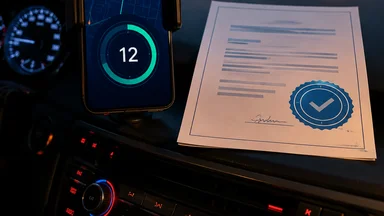
Embedded auto coverage aims to solve this by tying the insurance policy directly to the ride-share app's login status. When the driver logs in, a micro-policy activates, providing liability and collision coverage until they log out. The premium is calculated per minute or per mile, deducted from the driver's earnings. This model aligns risk with cost: the driver pays only when they are exposed.
However, the gap is not just about timing. It also involves the type of coverage. Personal policies typically have lower limits than commercial ones. If a driver in the app-on, no-passenger period is involved in a major accident, the personal policy's limits may be insufficient. Embedded products must therefore ensure that the coverage level matches the exposure, which can vary by state and platform.
How Embedded Auto Coverage Actually Works
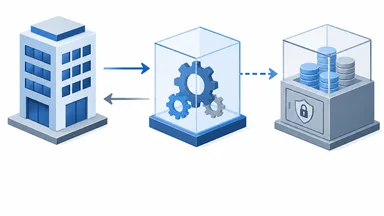
At its core, embedded auto coverage is an API-driven product. The insurer's system connects to the ride-share platform's login and trip data. When the driver opens the app and goes online, an API call triggers the insurer's rules engine to activate a policy. The coverage is often a parametric product: if a trip is logged and an incident occurs, the payout is based on the trip data—time, location, speed—rather than a traditional claims investigation. For example, a driver might be covered for liability up to $100,000 per accident during the app-on period. The premium for that period might be $0.10 per minute. The insurer calculates the total premium at the end of the day based on logged minutes and deducts it from the driver's earnings or bills monthly. The system is designed to be frictionless: no paper, no phone calls, no manual enrollment.
But the devil is in the details. The API must be reliable and secure. If the ride-share platform's data is delayed or inaccurate, the insurer may over- or under-charge. Some embedded products use a buffer: they bill a flat daily fee plus a per-minute charge, to smooth out data glitches. Others rely on the driver's smartphone GPS as a backup, cross-referencing the app's login status with location data to confirm the driver was actually on the road.
The parametric trigger is a double-edged sword. It reduces administrative costs—no adjuster needed for minor fender benders—but it also opens the door to disputes. If a driver's app logs them out automatically due to a low battery, but they were still driving, who is liable? Insurers typically require the driver to manually confirm they are offline, but enforcement is weak.
Telematics Data as the Underwriting Engine
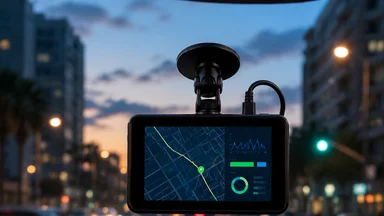
Embedded auto coverage relies heavily on telematics data collected from the driver's smartphone or a plug-in device. The data includes mileage, speed, braking patterns, and time of day. This information is used to score risk in real time, replacing the annual rating factors like age and credit score. The idea is that a driver who brakes hard at 2 a.m. is riskier than one who drives smoothly at noon, regardless of their demographic profile.
Some insurers, like Root Insurance, have built their entire model around smartphone telematics. Root measures driving behavior during a test period and then offers a quote. For ride-share drivers, the same data can be used to adjust premiums dynamically. If a driver consistently accelerates gently and maintains safe speeds, their per-minute rate drops. If they speed or brake harshly, it rises.
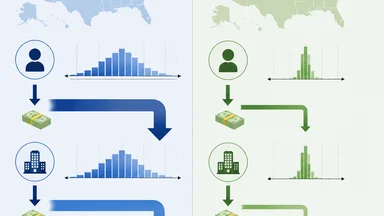
Fraud detection is another use of telematics. AI models can identify anomalies: sudden hard braking that doesn't match the road, or a trip that starts and ends at the same location within seconds, suggesting a staged incident. The telematics score gap between safe and risky drivers can be significant, but the data is not perfect. GPS accuracy can vary by up to 10 meters, and phone sensors can be fooled by a passenger holding the phone.
Insurers hedge their bets by using a margin of error in their models. They might ignore minor speeding incidents or treat them as a trend rather than a trigger. As of late 2024, some estimates suggest telematics-based pricing can reduce loss ratios by roughly 15 percent for ride-share fleets, but the margin is thin enough that a single fraud ring can wipe out a quarter's profit.
The Insurtech Players Pushing the Model
The embedded auto coverage space is crowded with startups and legacy carriers alike. Root Insurance, founded in 2015, was an early mover in smartphone-based telematics. Its app tracks driving behavior and offers a quote within minutes. For ride-share drivers, Root partnered with Uber in some states to offer usage-based coverage, though the partnership was later scaled back due to regulatory hurdles.
Slice Labs, a New York-based insurtech, offers an on-demand insurance platform that allows any company to embed coverage into its product. Slice's API can activate a policy for a ride-share driver in milliseconds, with a parametric trigger based on app login. The company has raised roughly $40 million in venture funding and works with several ride-share platforms outside the U.S.
Zego, a London-based insurer, targets gig-economy drivers with pay-as-you-go policies. Zego's product is popular with food delivery drivers but has expanded to ride-share. The company uses telematics data from the driver's phone and the delivery app to calculate premiums. By mid-2023, Zego had insured over 200,000 drivers across Europe.
Legacy carriers are not standing still. Allstate and Progressive have launched their own telematics programs, but they are slower to embed into third-party apps. Instead, they partner with B2B platforms like Trov or CoverWallet to distribute embedded policies. The challenge for incumbents is their legacy systems: an API that connects to a mainframe can take months to deploy, while insurtechs can do it in weeks.
Premium Leakage and the Anti-Fraud Arms Race
The same technology that enables seamless coverage also creates opportunities for abuse. Some drivers toggle the app on and off to avoid premium triggers. For example, a driver might log in to accept a ride, then log out immediately after pickup, claiming the trip was personal. If the insurer relies solely on the app login status, the driver avoids paying for the trip. This is a form of premium leakage that insurers call "app gaming."
Staged collisions are another risk. A fraud ring might use the embedded policy's parametric payout as a feature: they log into the app, stage a minor accident, and then claim the payout. Because the payout is automated, there is no adjuster to question the circumstances. In 2021, a Miami-based ring was charged with staging over 50 accidents using ride-share vehicles, exploiting the gap between personal and commercial coverage. The ring members would log into the app just before the crash to ensure coverage, then log out afterward to avoid raising flags.
Special Investigation Units at major insurers have responded by cross-referencing GPS logs with app login data. If a driver's GPS shows they were driving for 30 minutes but the app was logged in for only 5, that is a red flag. Machine learning models can flag patterns: multiple accidents at the same intersection, or drivers who consistently have accidents at the beginning of a trip. But the arms race continues. Fraud rings now use multiple phones to simulate different drivers, or they spoof GPS data to make it appear they were somewhere else.
The MGA-backed auto carriers that specialize in ride-share coverage are particularly vulnerable because they rely heavily on automated systems. A single fraud ring can cause losses that exceed the carrier's surplus. Reinsurers have begun to demand more robust fraud detection as a condition of coverage, pushing the cost of compliance onto the primary carriers.
Regulatory Hurdles and State-by-State Patchwork
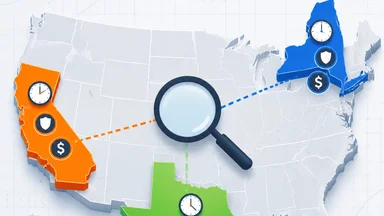
Embedded auto coverage faces a maze of state regulations. Each state defines what constitutes commercial versus personal use differently. In California, Proposition 103 limits how much insurers can vary rates based on driving behavior, restricting the use of telematics for pricing. In New York, all drivers must carry minimum liability coverage of $25,000 per person and $50,000 per accident, regardless of whether they drive for a ride-share platform. Embedded policies must meet these minimums, which can make per-minute pricing less attractive.
The National Association of Insurance Commissioners has proposed a model act that encourages parametric triggers and usage-based pricing, but adoption is slow. As of late 2024, fewer than 20 states have passed laws specifically addressing embedded auto coverage. In the remaining states, insurers must rely on existing statutes that were written before ride-share existed. This creates legal uncertainty: if a driver is in an accident while logged into the app but not carrying a passenger, some courts have ruled the personal policy applies, while others have ruled it does not.
Compliance costs are a significant barrier for startups. A new insurtech may need to file rates and forms in all 50 states, a process that can take years and cost millions. Some companies, like Slice, have chosen to partner with licensed carriers in each state rather than become licensed themselves. Others focus on a handful of states with favorable regulations, such as Texas or Arizona, where the regulatory environment is more permissive.
The gap between policy intent and actual coverage is not unique to auto insurance, but it is particularly acute here because the exposure is so time-sensitive. A ride-share driver's risk changes by the second, and the regulatory framework has not kept pace.
What Stays Hype and What Actually Changes
Embedded auto coverage is a genuine innovation for ride-share drivers. It reduces friction: no more manual toggling, no more worrying about gaps. The technology works well for the majority of drivers who use it honestly. But the hype around "seamless" and "real-time" insurance often ignores the messy reality of fraud, data errors, and regulatory complexity.
Claims handling remains human-intensive for serious accidents. A parametric payout works for a minor fender bender, but if there are injuries or disputed liability, an adjuster must still investigate. Telematics data can help, but it is not a substitute for a human interview. The idea that AI will replace claims adjusters is overblown, at least for the next several years.
Fraud detection has improved modestly, but the arms race means that for every new detection method, a countermethod emerges. The Miami ring was caught only after a tip from a competitor, not by the insurer's algorithms. Premium leakage through app gaming is still widespread, and insurers are reluctant to crack down too hard for fear of alienating drivers.
Consider the case of a driver in Texas who used a GPS spoofing app to fake his location while logged into the ride-share platform. He would appear to be waiting at a busy intersection when he was actually at home, collecting per-minute premiums without driving. The insurer only discovered the scheme when a routine audit of GPS data showed the driver's phone never moved more than 50 feet during a 12-hour shift. The company lost roughly $8,000 before the driver was dropped. This example illustrates how technology can both create and detect fraud.
On the regulatory front, some states are experimenting with pilot programs. For instance, Arizona passed a law in 2023 allowing insurers to offer usage-based policies without prior rate approval, as long as the pricing formula is transparent. Early data from that state shows that telematics-based policies have reduced claim frequency by roughly 10 percent among ride-share drivers, though the sample size is small. Whether these results hold at scale remains to be seen.
Another open question is how embedded coverage will interact with autonomous vehicles. If a ride-share vehicle is self-driving, who is liable—the manufacturer, the platform, or the driver? Parametric triggers based on app login may become irrelevant if there is no driver to log in. Some insurtechs are already exploring coverage models that shift risk to the vehicle's software, but those products are years away from market.
Ultimately, embedded auto coverage shifts risk rather than eliminating it. The gap is smaller, but it still exists. Drivers who toggle the app, fraud rings that exploit parametric triggers, and regulators who lag behind technology all ensure that the insurance industry's cat-and-mouse game continues. Whether regulators and insurers can close the remaining gaps remains an open question.
This article provides a general analysis of embedded auto coverage trends. Coverage terms vary by insurer, state, and policy. Readers should consult their own insurer for specific coverage details.