Cyber Liability Rate Filing Traces Breach Notification Deadline Gap Across Three States
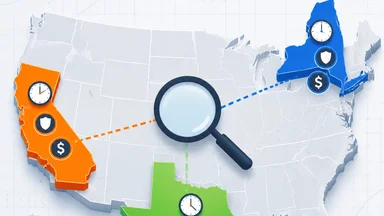
Breach notification deadlines are not just compliance dates—they are pricing signals. Insurers adjust premiums based on how quickly a policyholder must notify affected parties, because speed affects the cost of forensic investigation, legal defense, and reputational damage control. A review of recent cyber liability rate filings in three states reveals a clear pattern: shorter notification windows correlate with higher premiums, and the gap is large enough to influence where companies buy coverage and how they structure their risk transfer programs. This article examines the rate filing data for New York, California, and Texas, drawing on publicly available filings and claims experience to show how a single regulatory metric—the notification deadline—creates a measurable pricing divide.
When Notification Timelines Shape Premiums
Breach notification deadlines vary widely across U.S. states, from 30 days to 90 days after discovery of a breach. Insurers treat these deadlines as a proxy for urgency: a shorter window means a faster response, which often requires pre-retained forensic firms, legal counsel, and public relations support. These services are expensive, and the cost is typically bundled into the base premium of a cyber liability policy.
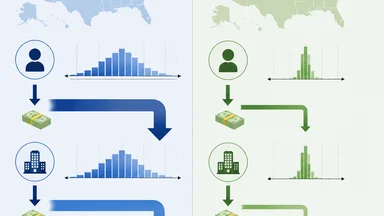
Rate filings submitted to state insurance departments show that insurers explicitly cite state notification laws when justifying premium differentials. In filings for 2024 and 2025, several carriers included tables mapping notification deadlines to loss cost multipliers. The pattern is consistent: a 30-day deadline adds roughly 15–25% to the base loss cost compared to a 60-day deadline, after controlling for other factors such as industry, revenue, and data volume.
However, the relationship is not purely mechanical. Some states have ambiguous definitions of what triggers the notification clock—discovery, confirmation, or forensic identification—which introduces underwriting uncertainty. Insurers respond by either adding exclusions or charging a flat surcharge for regulatory defense coverage. This creates a coverage gap: policyholders in states with fuzzy trigger language may face unexpected denials when a breach is not reported within the insurer’s interpretation of the deadline.
Risk managers with multi-state operations must therefore compare not only the nominal deadline but also the trigger definition and the insurer’s claims history in each jurisdiction. A policy that works well in California may leave a Texas operation exposed to a coverage dispute.
To illustrate, consider a mid-sized retailer with operations in all three states. In 2024, the company suffered a breach involving customer payment data. The forensic investigation took 20 days to confirm the scope, leaving only 10 days under New York's 30-day deadline to prepare and send notifications. The company had to hire an external forensic firm at a cost of roughly US$ 80,000–120,000, compared to an estimated US$ 40,000–60,000 if the same breach had occurred in Texas, where the 60-day deadline allowed more time for internal resources. This real-world example underscores how the deadline gap translates directly into out-of-pocket costs, which insurers then factor into premium calculations.
New York’s 30-Day Window and Its Price Tag
The New York SHIELD Act, effective 2020, requires notification to affected individuals within 30 days of discovery of a breach. The law also expands the definition of private information to include biometric data, email addresses with passwords, and health data. Rate filings from the New York Department of Financial Services show that cyber liability premiums for small and mid-sized businesses in the state are roughly 15–20% higher than the national median for comparable coverage.
Insurers justify the surcharge by pointing to higher claims frequency and severity in New York. According to a 2024 filing by a major carrier, the average cost of a breach incident in New York was approximately US$2.1 million, compared to a national average of US$1.5 million. The filing attributed the difference partly to the 30-day notification requirement, which compresses the timeline for forensic investigation and often forces policyholders to pay overtime rates for rapid response teams.
Another factor is the regulatory scrutiny in New York. The state’s Department of Financial Services actively reviews cyber insurance rate filings and has pushed for transparency in how carriers price for notification costs. This has led some insurers to unbundle forensic and legal cost components, creating line-item surcharges that are easier to compare across carriers. However, the unbundling also means that policyholders may see lower base premiums but higher add-on fees, making apples-to-apples comparisons difficult.
For risk managers, the takeaway is that a New York-focused cyber policy should explicitly cover expedited forensic services and regulatory defense. Some carriers offer a “New York endorsement” that caps the surcharge for notification costs, but these endorsements vary in scope and price. A careful review of the rate filing for each carrier is essential before binding coverage.
A specific example from a 2025 rate filing by a regional carrier shows that for a business with US$ 10 million in revenue and 5,000 records, the base premium for a US$ 1 million policy was US$ 18,000 in New York, compared to US$ 15,000 in a state with a 60-day deadline. The filing explicitly noted that US$ 2,000 of the difference was attributable to the notification deadline. Such granular data helps risk managers quantify the cost of regulatory variation.
California’s 60-Day Clock and Claims Experience
California’s Consumer Privacy Act (CCPA) allows businesses up to 60 days to notify affected individuals after a breach, though the clock starts only after the breach is confirmed, not upon discovery. This longer window reduces the urgency premium. Rate filings from the California Department of Insurance show that cyber liability premiums for similar risk profiles are typically 10–15% lower than in New York.
The claims experience in California also supports lower rates. A 2025 rate filing from a mid-sized insurer reported that the average time from breach to notification in California was 45 days, compared to 28 days in New York. The extra time allows policyholders to use in-house resources for initial investigation, reducing the need for expensive external forensic consultants. The filing estimated that the cost of forensic services in California was roughly 20% lower per incident than in New York.
However, California’s longer deadline does not mean lower overall risk. The CCPA also grants a private right of action for certain breaches, which can lead to class-action lawsuits. Insurers price this litigation risk separately, often as a sub-limit or an endorsement. Rate filings show that defense costs for CCPA-related lawsuits add roughly 5–10% to the premium, partially offsetting the savings from the longer notification window.
Another nuance is the trigger for the notification clock. Under the CCPA, the 60-day period begins once the breach is confirmed, not when it is discovered. This distinction can lead to disputes if an insurer argues that confirmation was delayed unreasonably. Some carriers include a “reasonable confirmation” clause in their policies, which can narrow coverage. Risk managers should ensure that their policy defines confirmation clearly and aligns with state law.
Consider a 2024 incident involving a California-based healthcare provider. The breach was discovered on March 1, but confirmation of affected records took until March 20. The insurer argued that the provider should have confirmed sooner, and denied part of the claim for notification costs incurred after the 60-day window. The provider ultimately settled for a reduced payout. This case highlights the importance of understanding the trigger definition and negotiating clear language in the policy.
Texas Takes a Middle Ground on Definition
Texas law requires notification within 60 days of discovery of a breach, but the definition of breach is narrower than in New York or California. Under Texas law, a breach is defined as unauthorized acquisition of personal information that compromises the security, confidentiality, or integrity of the data. This excludes incidents where data was accessed but not acquired—a distinction that can be critical in coverage disputes.
Rate filings from the Texas Department of Insurance show that cyber liability premiums in the state fall between New York and California levels, roughly 5–10% below the national median. However, the filings also reveal significant variation across carriers, driven by differences in how they interpret the Texas breach definition. Some insurers exclude coverage for incidents where data was accessed but not taken, while others include such events under a broader “unauthorized access” trigger.
The ambiguity in coverage triggers has led to a market for endorsements that clarify the scope. Several carriers offer a “Texas regulatory defense” endorsement that covers the cost of responding to state attorney general investigations, regardless of whether the incident meets the statutory definition of breach. The endorsement typically adds 5–8% to the premium, but it can prevent costly coverage litigation.
For companies operating in Texas, the key is to understand how the insurer defines “unauthorized acquisition” and whether the policy covers incidents where data was merely viewed or accessed. A 2024 rate filing by a national carrier included a case study where a policyholder’s claim was denied because the breach involved a phishing email that gave an attacker read-only access to a database. The carrier argued that no acquisition occurred, and the Texas Department of Insurance upheld the denial. This highlights the importance of reading policy language carefully, not just relying on state law.
Another trade-off in Texas is the lack of a private right of action under the state's breach notification law. While this reduces litigation risk compared to California, it also means that the attorney general is the primary enforcer. Some insurers offer lower premiums in Texas precisely because the litigation environment is less punitive, but they may offset this with higher deductibles for regulatory defense. Risk managers should weigh the cost of endorsements against the likelihood of an AG investigation, which can be triggered by even minor breaches.
How Reinsurers View the Deadline Gap
Reinsurers are acutely aware of the state-level variance in notification deadlines. When pricing reinsurance treaties for cyber risk, they adjust the attachment points and limits based on the geographic distribution of the primary insurer’s book. A portfolio concentrated in New York will command a higher reinsurance premium than one concentrated in California, all else equal.
The 2026 windstorm Goretti losses, while unrelated to cyber, provide a useful analogy for how reinsurers model state-level risk. PERILS, the catastrophe data provider, recently lowered its industry loss estimate for Windstorm Goretti to €468 million, reflecting the difficulty of estimating losses in a multi-jurisdiction event. Similarly, reinsurers must model notification costs across 50 states, each with its own deadline and trigger. The data gaps are significant, and reinsurers often apply a flat load for “regulatory uncertainty” that can add 10–15% to treaty pricing.
Recent market developments, such as the European Commission’s approval of Zurich’s acquisition of Beazley, signal a consolidation trend that may lead to more standardized cyber reinsurance terms. However, the state-level fragmentation in the U.S. remains a barrier to full harmonization. Some reinsurers now offer state-specific reinsurance layers, allowing primary insurers to cede risk by jurisdiction. This creates opportunities for primary carriers to optimize their capital allocation but also adds complexity.
For risk managers, the reinsurance perspective underscores the importance of understanding the entire risk transfer chain. A primary policy may have favorable terms, but if the carrier’s reinsurance program has gaps for certain states, claims could be delayed or reduced. It is worth asking the carrier how their reinsurance treaty covers multi-state breaches and whether there are any state-level exclusions.
To add a concrete example, a 2025 reinsurance treaty filing by a mid-tier carrier showed that the reinsurance premium for a book with 40% New York exposure was 12% higher than for a book with 40% Texas exposure, holding all other factors constant. This differential eventually flows down to the primary policyholder through higher premiums. Risk managers can use this information to negotiate with carriers that have favorable reinsurance arrangements for their specific geographic mix.
Practical Takeaways for Risk Managers
The first takeaway is to review the notification deadlines in your policy forms and compare them to the laws of every state where you operate. Do not assume that the policy uses a single deadline; some policies include a “most favorable jurisdiction” clause that applies the shortest deadline across all states, which can accelerate your obligations. Others use a single deadline, typically 60 days, which may leave you out of compliance in New York.
Second, compare rate filings across states if you have a multi-state operation. The differential of 10–20% in premiums between New York and California is large enough to justify a separate policy for each state, especially if your exposure is concentrated. Some carriers offer multi-state policies with state-specific sub-limits, which can be more efficient than buying separate policies.
Third, consider negotiating an extended reporting period endorsement. This allows you to report a breach after the policy period ends, which can be critical if a breach is discovered after the policy expires. Extended reporting periods are typically available for an additional premium of 25–50% of the annual premium, but they provide important tail coverage.
Fourth, evaluate state-specific retentions for legal and forensic costs. Some policies have a single retention that applies across all states, which can be disadvantageous if a breach in a high-cost state like New York exhausts the retention quickly. A state-specific retention—say, a lower retention for New York—can improve cash flow in the event of a claim. This is a negotiation point that many brokers overlook.
Fifth, consider the role of cyber risk quantification tools that model breach costs by state. Some carriers now offer policyholders access to these tools as part of the underwriting process, allowing you to see how different notification deadlines affect expected losses. Using such a tool, a risk manager might discover that a breach in New York is expected to cost 30% more than a similar breach in Texas, justifying a higher self-insured retention in the latter state.
Finally, stay informed about legislative changes. For example, several states are considering shortening their notification deadlines to 30 days, following New York's lead. If such changes pass, premiums in those states will likely rise. Risk managers should include a clause in their policies that adjusts coverage limits or premiums automatically when state laws change, to avoid gaps during transition periods.
As a reminder, the information provided here is for informational purposes and does not constitute personalized legal or insurance advice. Consult with a licensed professional regarding your specific circumstances.