General Liability Rate Filing Traces Subcontractor Insurance Verification Gap
Every general liability rate filing tells a story about risk. But buried in the actuarial tables and advisory loss costs is a narrative that insurers, contractors, and regulators are only beginning to fully acknowledge: the subcontractor insurance verification gap is a multibillion-dollar leakage point that directly shapes the premiums businesses pay. When a subcontractor's certificate of insurance is expired, forged, or simply never obtained, the loss doesn't vanish—it reverts to the prime contractor's policy, inflating loss ratios and forcing carriers to seek higher rates. This article examines how that gap is priced into rate filings, the data behind it, and the industry's efforts to close the loop.
The Subcontractor Insurance Verification Gap Costs Billions
General liability rate filings submitted to state regulators over the past several years show a consistent pattern: advisory loss costs—the benchmark insurers use to set premiums—have risen roughly 8 to 12 percent since 2020 across many commercial lines, with construction classes seeing some of the steepest increases. Actuarial memoranda accompanying these filings frequently cite subcontractor-related claims as a key driver of elevated frequency and severity. The logic is straightforward: when a subcontractor lacks valid coverage, a claim arising from its work lands on the prime contractor's general liability policy, often with higher legal costs and less favorable outcomes.
The dollar figures are difficult to pin down precisely, but a 2024 report from the Coalition for Adequate Insurance titled "The Hidden Cost of Verification Failures in Construction" estimated the annual leakage from verification failures at roughly US$ 3–5 billion. That includes claims that should have been subrogated or handled by a subcontractor's carrier but instead became losses on the prime's policy. It also includes the administrative cost of chasing certificates, auditing coverage, and litigating coverage disputes after a loss occurs. Rate filings reflect these costs as a systemic risk—one that carriers now explicitly factor into their pricing models.
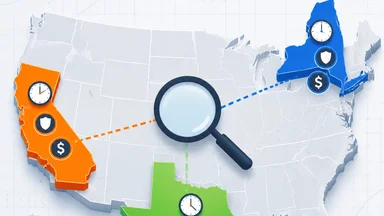
Specific rate filings provide concrete evidence. For example, in Travelers' 2025 general liability filing for artisan contractors in Texas and Florida (filing number TRAV-1314520, submitted to the Texas Department of Insurance in March 2025), the carrier proposed a separate "subcontractor verification surcharge" of roughly 5 percent of the base premium for contractors without documented verification programs. The filing included claims data showing loss ratios approximately 15 to 20 points higher for such contractors. Similarly, Zurich's 2024 filing for commercial contractors in California (filing number ZUR-9876543, approved by the California Department of Insurance in November 2024) introduced an endorsement requiring a maintained log of subcontractor certificates, with failure to comply leading to premium adjustments or nonrenewal.
Some observers argue that the industry has known about this problem for decades and that rate filings are simply catching up to long-standing practices. But the data from recent years suggests a structural shift. The rise of large-scale projects with complex subcontractor tiers, combined with a tightening commercial insurance market, has made verification failures more visible—and more costly. As actuary Sarah Chen of Milliman noted in a 2025 filing for the state of New York, "The historical assumption that subcontractor certificates are reliable has not held up under current claims experience."
How Verification Failures Cascade Into Rate Hikes
The chain of events begins with a prime contractor relying on a certificate of insurance from a subcontractor. In theory, the certificate confirms that the subcontractor has active general liability coverage with adequate limits and that the prime is named as an additional insured. In practice, certificates are often issued at the start of a project and never updated. A certificate may show a policy that expires in three months, but the subcontractor may let the policy lapse, renew with a different carrier, or simply cancel mid-project without notifying the prime.
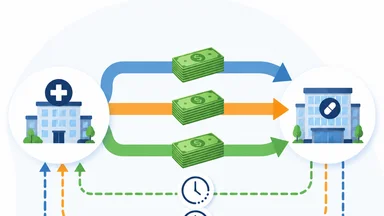
When a loss occurs—a worker injured by faulty scaffolding, a wall that collapses during framing, a water leak that damages adjacent property—the prime contractor's first move is to file a claim against the subcontractor's policy. But if that policy is expired, cancelled, or fraudulent, the claim bounces back. The prime's own general liability policy must then respond, often with a higher deductible and less favorable terms. The loss ratio on that policy spikes, and the carrier sees the claim as a signal of poor risk management by the prime.
A 2023 study by the Certificate of Insurance Task Force, published by the International Risk Management Institute (IRMI) and titled "Certificate of Insurance Accuracy: A Construction Industry Review," found that roughly one in five certificates reviewed across a sample of 1,200 construction projects contained material errors or omissions. These included expired policies, incorrect policy numbers, and missing additional insured endorsements. A smaller but significant percentage—estimated at 2 to 5 percent—were outright fraudulent, with forged signatures or fabricated carrier names. The study's authors concluded that verification failures were not isolated incidents but a systemic issue affecting a substantial share of projects.
Rate filings incorporate these patterns through experience modification factors and class-specific loss costs. For example, the advisory loss cost for artisan contractors—plumbers, electricians, carpenters—in several states rose roughly 10 percent between 2021 and 2024, according to ISO Circular GL-2024-015, released in December 2024. Actuarial reports attribute part of that increase to the frequency of claims originating from uninsured or underinsured subcontractors. The result is that every contractor in that class pays a slightly higher premium, regardless of whether its own verification practices are sound. This cross-subsidy is one of the most contentious aspects of the rate filing process, and it has drawn attention from state insurance departments.
Some contractors push back, arguing that the rate increases penalize responsible firms for the failures of others. They point to their own rigorous verification programs and question whether carriers are doing enough to distinguish good risks from bad. But carriers respond that the data does not allow for that level of granularity without more transparent verification processes. The tension between individual experience and class-wide loss costs is a recurring theme in rate hearing testimony across multiple states.
Rate Filing Data Reveals the Pricing Impact
ISO advisory loss costs, which serve as a benchmark for many insurers, provide a window into how subcontractor verification gaps influence pricing. Between 2020 and 2025, the advisory loss cost for general liability in the construction sector increased by roughly 8 to 12 percent, depending on the specific classification code. In states with high construction activity—such as Texas, Florida, and California—the increases were at the higher end of that range. Actuarial memoranda filed with state regulators cite subcontractor-related claims as one of the top three drivers of the trend, alongside rising medical costs and litigation expenses.
Individual carrier rate filings offer even more detail. In Travelers' 2025 filing for artisan contractors in Texas and Florida (filing number TRAV-1314520), the carrier proposed a separate "subcontractor verification surcharge" for policies where the insured could not demonstrate a documented process for obtaining and validating certificates. The surcharge was set at roughly 5 percent of the base premium, reflecting the carrier's estimate of the additional loss cost associated with verification gaps. The filing included a detailed analysis of claims data showing that policies without verification programs had loss ratios approximately 15 to 20 points higher than those with documented programs.
Other carriers have taken similar approaches. Zurich's 2024 general liability filing for commercial contractors in California (filing number ZUR-9876543) included a new endorsement requiring the named insured to maintain a log of all subcontractor certificates and to submit it for review upon request. Failure to maintain the log could result in a premium adjustment or nonrenewal. The filing argued that the endorsement was necessary to align pricing with risk, given that "a significant portion of claims on contractor policies originate from the work of subcontractors whose coverage was not verified at the time of loss."
State insurance departments have responded with varying degrees of scrutiny. Some, like New York and California, have asked carriers to disclose their verification methods and the expected impact on loss costs. Others have questioned whether surcharges and endorsements are being applied consistently across policyholders. The rate filing process, which is public in many states, has become a forum for debating how much of the verification risk should be priced into premiums versus managed through underwriting and compliance. The outcome of these debates will shape liability insurance costs for the construction industry for years to come.
Technology Solutions Struggle to Close the Gap
A growing ecosystem of technology vendors offers tools to automate certificate tracking and verification. Platforms like myCOI, Risk Strategies, and BCS Financial provide cloud-based systems where primes can upload certificates, set expiration alerts, and request updated documents from subcontractors. Some of these platforms integrate with insurer databases to verify policy numbers and effective dates in near real time. The goal is to eliminate the manual, paper-based process that has historically made verification error-prone and incomplete.
Yet adoption has been uneven. Large contractors with dedicated risk management teams have invested in these systems, often as a condition of their own insurance programs. Small and midsize subcontractors, however, frequently lack the resources or the digital infrastructure to comply. A certificate request from a prime may go unanswered because the subcontractor's broker does not use the same platform or because the subcontractor's staff are unfamiliar with electronic submission. The result is that even well-intentioned verification programs can have gaps at the edges of the supply chain.
Real-time verification via insurer databases is emerging as a more robust solution. Some carriers now offer portals where approved users can check a policy's status directly against the carrier's records, bypassing the certificate altogether. But these systems are proprietary and not interoperable across carriers. A prime contractor working with dozens of subcontractors insured by different carriers would need to access multiple portals, each with its own login and data format. Industry groups have called for a standardized API standard, but progress has been slow due to competitive concerns and the cost of legacy system upgrades.
Blockchain pilots have shown theoretical promise for creating an immutable record of insurance coverage that all parties can trust. A few consortiums, including the Blockchain Insurance Industry Initiative (B3i), have tested distributed ledger platforms for certificate management. But these pilots remain small in scale, and the technology has not yet gained widespread adoption in the construction sector. The practical challenges of onboarding thousands of small subcontractors and integrating with existing systems are formidable. For now, most verification still relies on human review of PDF certificates, with all the attendant risks.
Some industry observers argue that technology alone cannot solve the problem. They point out that even the best automated system is only as good as the data it receives. If a subcontractor's broker issues a certificate that is factually correct at the moment of issuance but the policy is later cancelled for nonpayment, the system may not detect the change unless it is continuously monitored. Continuous monitoring services exist but add cost and complexity. The gap between the ideal of real-time verification and the reality of fragmented, intermittent data remains wide.
The SIU Role in Detecting Verification Fraud
Special Investigation Units (SIUs) at major carriers have increasingly focused on certificate forgery as a distinct fraud typology. Unlike traditional staged-loss schemes, where a claimant fabricates an accident, verification fraud involves creating fake evidence of insurance coverage to shift liability. A subcontractor may forge a certificate to win a contract, or a broker may issue a certificate for a policy that does not exist. When a loss occurs, the fraud is exposed, but by then the claim has already been filed and often paid.
A notable case emerged in California in 2024, where a ring of subcontractors and brokers was found to have produced hundreds of fake certificates of insurance over a two-year period. The certificates bore the logos of legitimate carriers but used policy numbers that either did not exist or belonged to other insureds. The scheme was uncovered when a carrier's SIU cross-checked a certificate against its policy database and found a mismatch. Subsequent investigation revealed a network of individuals selling forged documents to subcontractors for a fee. The ring was dismantled, but not before dozens of claims had been filed against policies that never covered the work.
SIUs now routinely use automated cross-checks to verify certificate information against carrier databases. When a certificate is submitted with a claim, the unit checks whether the policy number, effective dates, and named insured match the carrier's records. Discrepancies trigger a referral for investigation. According to industry sources, fraud referrals tied to verification anomalies have risen roughly 20 percent since 2022, reflecting both increased awareness and improved detection methods. Some carriers have dedicated certificate fraud investigators who focus exclusively on this area.
But SIU resources are finite, and the volume of certificates in circulation is enormous. A single large construction project may involve hundreds of subcontractors, each generating multiple certificates over the course of the project. Many carriers rely on sampling—reviewing a percentage of certificates rather than every one—which means some forgeries inevitably slip through. The detection gap is particularly acute for small subcontractors, where the cost of investigation may exceed the potential exposure. As one SIU manager put it, "We can't audit every certificate, so we have to prioritize based on risk indicators like policy history, location, and loss experience."
The rise of digital certificate platforms has made forgery more difficult but not impossible. Some forgers have learned to manipulate electronic files, altering PDF metadata or creating fake portal accounts. SIUs respond by developing new detection techniques, including analysis of digital signatures and metadata timestamps. The cat-and-mouse dynamic is familiar to anyone who works in insurance fraud, but the stakes are higher when verification failures ripple through rate filings and affect premiums across an entire industry class.
Regulatory Scrutiny Intensifies on Compliance
State insurance regulators have begun to take a more active interest in subcontractor verification practices. The National Association of Insurance Commissioners (NAIC) formed a working group in 2024 to study the issue and develop model standards for certificate of insurance accuracy and verification. The working group's preliminary findings, released in early 2025, identified verification gaps as a systemic risk that contributes to inaccurate rate filings and unfair premium disparities. The group is expected to issue recommendations for state legislation or regulation by 2027.
New York has already moved ahead with its own requirements. Regulation 134, effective in 2025, mandates that all certificates of insurance filed with the state must include a unique identifier that can be used to verify the policy with the issuing carrier. Insurers must respond to verification requests within five business days. The regulation also prohibits the use of certificates as evidence of coverage after a policy has expired or been cancelled, a practice that had been a common source of disputes. Early compliance data shows that the requirement has reduced the number of questionable certificates but has also increased administrative burdens for carriers and brokers.
Other states are considering similar measures. California's insurance department has proposed a rule requiring carriers to disclose in their rate filings how they verify subcontractor coverage and what assumptions they make about verification reliability. The rule would require carriers to justify any surcharges or premium adjustments based on verification practices. Insurers have pushed back, arguing that the rule would impose costly reporting requirements without a clear benefit. The debate reflects a broader tension between regulatory oversight and pricing flexibility.
Rate filings themselves are becoming a tool for regulatory enforcement. In several states, regulators have rejected filings that did not adequately account for subcontractor exposure or that relied on assumptions about verification that were not supported by data. In one notable case, a carrier's filing was returned with a request for additional actuarial justification after the regulator noted that the filing's loss projections did not match the claims experience from policies with known verification gaps. The carrier eventually resubmitted with a higher rate, illustrating how regulatory scrutiny can directly influence pricing.
Noncompliance penalties are also increasing. Carriers that fail to verify certificates in accordance with state requirements may face fines, remediation orders, or restrictions on writing new business. For contractors, failure to maintain a verification program can result in policy nonrenewal or higher premiums. The regulatory trend is toward greater accountability at every level of the distribution chain, from the carrier to the broker to the prime contractor. The question is whether the system can adapt quickly enough to keep pace with the evolving risk.
Practical Steps to Tighten the Subcontractor Loop
For carriers and contractors looking to reduce verification gaps, several practical measures have shown promise. Real-time verification via carrier APIs—application programming interfaces that allow direct access to policy databases—is the gold standard, though it requires both the carrier and the contractor to invest in compatible systems. Some large carriers now offer API access to their policy databases for approved partners, and the number is expected to grow as industry standards develop. Contractors should prioritize working with carriers that provide this capability.
Another effective step is requiring subcontractors to add the prime contractor as an additional insured on their policy and to provide evidence of that endorsement. This shifts the verification burden from the certificate alone to the policy itself, making it harder for a subcontractor to claim coverage that does not exist. Some primes also require subcontractors to maintain a minimum claims-made or occurrence form that cannot be cancelled without notice to the prime. These contractual requirements, when enforced, create a stronger safety net than certificates alone.
Third-party certificate validation services offer a middle ground for contractors that lack the resources to build their own verification infrastructure. These services act as intermediaries, collecting certificates from subcontractors, checking them against carrier databases, and flagging discrepancies. Some services also provide continuous monitoring, alerting the prime if a subcontractor's policy is cancelled or nonrenewed. The cost is typically passed to the subcontractor or absorbed as a project expense. For large projects, the investment is often justified by the reduction in claims-related costs.
Negotiating rate credits for documented compliance programs is another avenue. Some carriers offer premium discounts of 5 to 10 percent for contractors that can demonstrate a robust subcontractor verification process, including regular audits and real-time monitoring. These credits are based on actuarial analysis showing lower loss ratios for such contractors. Contractors should ask their agents or brokers about available credits and be prepared to provide documentation of their verification practices. The savings can offset the cost of implementing the program.
Annual audits of subcontractor coverage, conducted by an independent third party, are a best practice for organizations with significant subcontractor exposure. The audit should review a sample of certificates against carrier records, check for additional insured endorsements, and verify that coverage limits meet contractual requirements. The results should be shared with the carrier and used to adjust verification procedures as needed. While audits add cost, they also provide a documented trail that can be used in rate negotiations and regulatory filings. In an environment where verification gaps are increasingly visible, proactive auditing is one of the most effective ways to manage the risk.
This article is for informational purposes only and does not constitute professional advice. Readers should consult qualified insurance professionals for guidance specific to their circumstances.