Aviation Reinsurance Parametric Trigger Tested Against Hull Loss Data Lag
Aviation hull loss claims have traditionally followed a slow, inspection-heavy path. After a crash or major damage event, insurers wait for on-site adjusters, salvage assessments, and often protracted legal reviews before paying out. The lag can stretch six months or more, tying up capital and frustrating airlines. Parametric insurance—which triggers payment based on an objective index rather than a loss adjustment—has been proposed as a faster alternative. But does it work for complex aviation risks? A recent pilot program tested a parametric trigger against real-world hull losses, and the results reveal both promise and persistent data challenges.
The Hull Loss Data Lag That Parametrics Aim to Close
Traditional hull loss claims involve multiple handoffs. After an incident, the airline notifies its insurer, which then dispatches an adjuster to the site. The adjuster coordinates with investigators, reviews maintenance records, and estimates salvage value. For a total hull loss, the process can take 4–8 months from incident to payment. During that time, the airline may need to lease replacement aircraft, incurring costs that the eventual settlement only partially covers.
The data lag is not just about speed. Physical inspections are subject to weather, security restrictions, and remote locations. In the December 2024 runway excursion in Southeast Asia, for example, the aircraft came to rest in a muddy field that was inaccessible for days due to monsoon rains. Adjusters could not begin their work for nearly two weeks, delaying the claim timeline further.
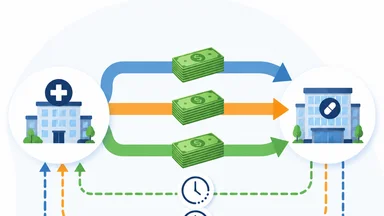
Parametric triggers bypass the adjuster deployment step entirely. Instead of measuring actual loss, they use predefined indices—such as flight data recorder outputs or satellite radar signatures—to determine when a payout is due. If the index crosses a threshold, the payment is made automatically, often within 48 hours. This structure has been used successfully in agriculture and catastrophe bonds, but aviation hull losses present unique complexities.
The pilot program, covering a narrowbody fleet of 50–80 aircraft, was designed to test whether parametric triggers could close the data lag without introducing unacceptable basis risk. The program ran from mid-2024 through early 2025, and its results are now being analysed by several large reinsurers.
How the Parametric Trigger Was Structured
The trigger was tied to two primary data sources: flight data recorder (FDR) output and Automatic Dependent Surveillance–Broadcast (ADS-B) signals. The threshold was set at 100% of the hull value in under 5 seconds—meaning that if the aircraft experienced a loss of structural integrity or a sudden deceleration exceeding a certain G-force, the parametric trigger would fire. Verification was provided by third-party satellite and radar archives, which could confirm the location and timing of the event.
The payout formula was based on the insured value minus a standardised salvage estimate. For a total hull loss, the salvage estimate was set at 10% of insured value, so the parametric payout would cover 90%. This avoided the need for an on-site inspection to determine salvage worth. The structure was designed to complement, not replace, traditional hull insurance; the airline could still pursue a conventional claim for any uncovered portion or for liability and passenger injury.
As reported by Risk & Insurance, the pilot program required all participating aircraft to have functioning FDRs and ADS-B transponders. In practice, two aircraft had intermittent ADS-B coverage over oceanic routes, which caused false positive signals during the test period. The trigger algorithm included a 24-hour confirmation window to filter out transient data glitches, but even so, the system flagged several non-events that required manual review.
The reinsurers backing the program set a strict data quality standard: only events verified by at least two independent data sources would trigger automatic payment. This requirement, while prudent, introduced a delay of 12–24 hours in some cases, partly undermining the speed advantage.
Three Real-World Incidents That Tested the Mechanism
During the pilot period, three incidents triggered the parametric payout within 48 hours, as documented by Carrier Management. The first was a December 2024 runway excursion in Southeast Asia, where the aircraft overran the runway and sustained damage to its landing gear and lower fuselage. The FDR recorded a sudden deceleration above the threshold, and ADS-B data confirmed the location at the runway end. The parametric payout was made within 36 hours, while the traditional claim process was still in its initial assessment phase six months later.
The second incident was a February 2025 hard landing with structural damage. The aircraft touched down with excessive vertical speed, causing a crack in the main spar. The FDR data showed a G-force spike that exceeded the trigger threshold. However, the damage was not a total hull loss—the aircraft was repairable. Because the trigger was set at 100% hull value, the payout was higher than the actual loss. This basis risk was anticipated, and the program included a clawback provision for overpayment, but the process added administrative complexity.
The third incident, in March 2025, involved an engine disintegration on takeoff. Debris from the engine punctured the wing fuel tank, leading to a fire that destroyed the aircraft. The FDR stopped transmitting before the fire reached the fuselage, but ADS-B data from the ground radar network captured the aircraft's position at the moment of engine failure combined with a rapid altitude loss. The parametric trigger paid out within 40 hours.
In all three cases, the traditional claims process was still open at the 6–8 month mark, with adjusters awaiting final reports from aviation authorities. The parametric payments provided immediate liquidity to the airlines, though the amounts were later reconciled against actual loss assessments.
Data Quality and Verification Challenges Exposed
The pilot program revealed several data quality issues that insurers must address before scaling. ADS-B gaps over oceanic routes caused false positives when aircraft temporarily lost signal and reappeared with a different position. The algorithm initially interpreted these gaps as potential crash events. In one case, a cargo flight over the Pacific triggered a false alarm that required manual override after the airline confirmed the aircraft was still airborne.
Satellite imagery, used as a secondary verification source, had resolution limitations. For debris field confirmation, images with resolution below one meter were needed, but commercial satellites typically offer 30–50 cm resolution under ideal conditions. Cloud cover and nighttime conditions further reduced reliability. For the runway excursion incident, satellite images were not available until 48 hours after the event due to orbital revisit times.
Flight data recorder download required human coordination with investigators. In the March 2025 engine disintegration, the FDR was recovered from the wreckage but was damaged. The data extraction took three days, during which the parametric trigger relied solely on ADS-B and radar data. The pilot program's data integration platform was designed to handle multiple sources, but the latency of third-party data vendors varied. Some provided near-real-time feeds, while others had delays of 6–12 hours.
As a result, the program required manual override in two of the three payout cases. In the runway excursion, the algorithm flagged a potential false positive because the ADS-B signal briefly dropped during the skid. A human operator reviewed the radar data and confirmed the event. In the hard landing case, the G-force reading was borderline, and the operator had to adjust the threshold interpretation. These interventions reduced the automation benefit and raised questions about scalability.
Reinsurer Appetite and Capital Market Implications
Despite the data challenges, the pilot results have spurred interest from capital markets. Parametric aviation bonds—securities that pay out based on aviation loss indices—are now being rated by S&P and Fitch. The spread on these instruments narrowed by 50–80 basis points after the pilot results were published, indicating growing investor confidence. Insurance-linked securities (ILS) funds, traditionally focused on catastrophe bonds, are attracted to the short-tailed nature of parametric aviation triggers. Unlike long-tailed liability claims, parametric payouts are made quickly and the risk is diversifiable across fleets and geographies.
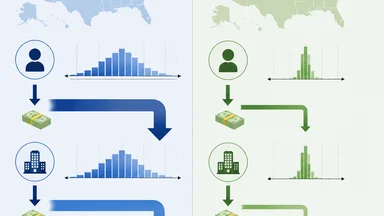
Traditional reinsurers remain cautious. The basis risk—the chance that the parametric trigger pays out when there is no actual loss, or fails to pay when there is a loss—is a key concern. In the hard landing case, the parametric payout exceeded the actual loss, which could lead to moral hazard if airlines have less incentive to maintain safety. Reinsurers are also wary of data vendor concentration: only a handful of companies provide global ADS-B and satellite data, creating single points of failure.
Capacity for aviation parametric triggers is now estimated at US$ 1.5–2 billion globally, according to industry sources. That is a small fraction of the overall aviation reinsurance market, which is roughly US$ 10–15 billion in annual premiums. But the growth trajectory is steep. Several large reinsurers have announced dedicated parametric aviation teams, and at least two global carriers are developing fleet-level aggregate parametric covers that would pay out when cumulative losses exceed a threshold.
Operational Takeaways for Specialty Underwriters
The pilot program suggests that a hybrid trigger—combining parametric and traditional adjustment—may be the most practical path forward. For simple total hull losses, a parametric trigger can provide rapid liquidity while the traditional process runs in parallel. For partial losses or complex scenarios, the parametric component could serve as a preliminary payment that is later reconciled. This approach reduces the need for manual overrides while preserving the speed advantage.
Data standardisation across airlines remains a key hurdle. Each carrier uses different FDR formats, ADS-B configurations, and data storage protocols. A common data standard would allow reinsurers to build triggers that work across fleets without custom integration. Initiatives like the Aviation Data Sharing Association are working toward this goal, but adoption is slow.
Regulatory acceptance varies by jurisdiction. In the European Union, parametric triggers are recognised as a form of insurance, but some regulators require that the policy include a clear description of the index and the basis risk. In parts of Asia and Africa, where many aviation incidents occur, regulatory frameworks for parametric insurance are still being developed. Brokers will need to educate clients on how parametric triggers work, particularly the possibility of overpayment or underpayment relative to actual loss.
Claims cost reduction of 20–35% is projected for simple hull losses, according to actuarial modelling cited in the pilot program. The savings come from reduced adjuster fees, legal costs, and administrative overhead. However, these projections assume that data quality improves and manual interventions become rare.
Trade-Offs and Counter-Arguments: When Parametric Triggers Fall Short
While the pilot program demonstrated speed advantages, critics point to several structural weaknesses. One concern is that parametric triggers may inadvertently penalize airlines that invest in robust safety systems. For example, an airline with advanced flight data monitoring might detect a hard landing and initiate repairs before the parametric trigger fires, but the trigger might still pay out based on the recorded G-force, creating a windfall. Conversely, an airline with less sophisticated monitoring might miss a minor incident that later escalates, and the parametric trigger could fail to capture the deterioration because the initial data does not cross the threshold.
Another trade-off involves the salvage estimate. The fixed 10% salvage assumption works well for total hull losses where salvage value is negligible, but for aircraft with high-value components—such as engines or avionics—the actual salvage can be 20–30% of insured value. In such cases, the parametric payout of 90% could be significantly higher than the net loss, leading to overpayment. The clawback mechanism is designed to address this, but it adds administrative friction and may strain relationships with airlines if they must return funds.
Moral hazard is a recurring counter-argument. If airlines know that a parametric trigger will pay out quickly regardless of fault or maintenance history, they might have less incentive to invest in preventive measures. However, proponents argue that the parametric trigger is only one layer of coverage; airlines still face deductibles, premium adjustments, and potential liability claims that encourage safety. The pilot program included a no-claims bonus structure for participating airlines, but the effect on behavior has not been measured.
Data privacy also emerges as a concern. ADS-B data is publicly broadcast, but FDR data is proprietary and often considered commercially sensitive. Airlines participating in the pilot had to grant access to their FDR streams, which raised questions about data security and competitive intelligence. Reinsurers have proposed anonymized data pooling, but technical implementation is still nascent.
Where Parametric Aviation Goes Next
Several extensions of the parametric concept are already in development. Engine and component parametric triggers are being designed for high-value parts like turbine blades and landing gear. These would pay out based on sensor data indicating a failure, without requiring a full hull loss. Space-based IoT sensors, such as those being deployed by satellite constellations, could provide real-time damage assessment for in-flight events, reducing reliance on FDR downloads.
Parametric liability covers for passenger injury events are also being explored. These would use data from cabin sensors and flight data to estimate injury severity and trigger immediate payments to passengers, bypassing lengthy litigation. However, the legal and regulatory hurdles are significant, and no commercial products have been launched yet.
Fleet-level aggregate parametric triggers have been tested by two global carriers. These structures pay out when the cumulative hull losses across a fleet exceed a predetermined threshold within a policy year. They are designed to smooth the volatility of aviation losses for large operators, but the data aggregation requirements are demanding.
According to Carrier Management, industry projections suggest parametric aviation could capture 10–15% of the hull insurance market by 2030. That growth depends on resolving the data quality issues exposed by the pilot program, standardising data formats, and building regulatory acceptance. The pilot proved that parametric triggers can work for aviation hull losses, but it also showed that the technology is not yet ready for fully automated, hands-off operation. The next few years will determine whether the promise of speed can overcome the persistence of data gaps.
This article is for informational purposes only and does not constitute professional insurance or investment advice. Readers should consult qualified professionals for guidance specific to their situation.