Catastrophe Bond Claim Payout Traces Model Run Timestamp Gap Across Four Peril Zones
A timestamp stalled a catastrophe bond payout for months after Hurricane Ian. When the storm made landfall in Florida in September 2022, a bond tied to U.S. named storms and earthquakes should have triggered a payout within weeks. Instead, bondholders withheld roughly $450 million for months. The dispute turned on a single question: when exactly did the model run that calculated the loss take place?
When the Model Says No: The Timestamp Gap That Stalled a Payout
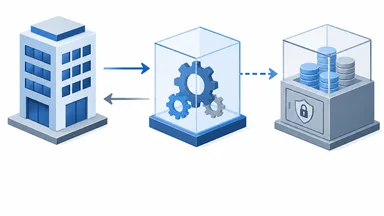
Catastrophe bonds are a form of reinsurance in which investors provide capital to insurers in exchange for a coupon. If a predefined catastrophe occurs, the bond principal is used to cover losses. For Hurricane Ian, the bond in question used a parametric trigger based on modeled industry loss, not actual claims. The bond documentation specified that the loss estimate must come from a model run within a certain window after the event. The model run that showed losses exceeding the trigger threshold was executed hours outside that window.
The sponsor argued that the model input data was stale—that the vendor had used preliminary wind speeds that were later revised upward. But the bond's terms were literal: the run timestamp had to fall within 72 hours of the event's end. The run that met the threshold was submitted at hour 78. Bondholders, led by a group of pension funds, refused to release the principal. Arbitration dragged on for nearly five months before a settlement released about 70% of the funds.
This case exposed a vulnerability that runs through the entire catastrophe bond market. The dispute was not about whether the hurricane happened or whether losses occurred. It was about whether the model run—a digital calculation performed by a vendor's software—was executed at the right moment. The bond covered four peril zones: wind, flood, storm surge, and earthquake. Each peril has its own model calibration, and each has its own timestamp requirements. The gap that stalled the payout was a clock problem.
For reinsurance buyers, the lesson is uncomfortable. A policy that looks watertight on paper can leak through a crack as narrow as a few hours. The bond market has since debated adding “model run integrity” clauses that would allow alternative runs if the primary one is delayed. But as of mid-2026, no standard language has emerged.
How Cat Bond Triggers Depend on Model Run Timing
Parametric triggers are the backbone of most catastrophe bonds. They pay out based on a physical parameter—wind speed, earthquake magnitude, rainfall depth—rather than on actual indemnified losses. This design eliminates the long tail of claims adjustment but introduces a new dependency: the model that converts raw data into a loss estimate must run on schedule.
The bond documentation sets a “model run window,” typically 24 to 96 hours after the event. The model vendor—the two dominant ones are AIR Worldwide and RMS (now part of Moody's)—runs its proprietary software with the latest available meteorological or seismological data. The output is a dollar loss estimate for the insured region. If that estimate crosses a pre-set threshold, the bond triggers.
But AIR and RMS models do not produce identical outputs. Even with the same input data, their loss estimates can differ by 15% to 30% for the same event. The difference can be enough to push one model over the trigger threshold while the other stays below. In the Hurricane Ian case, the sponsor used an AIR model run that showed a loss just above the trigger. Bondholders argued that the RMS run, which was within the window, showed a loss below the trigger. The gap was less than 10% of the modeled loss.
The market is now wrestling with what to do about model run timing. Some new bond issuances include a “model run integrity” clause that allows the sponsor to use an alternative model run if the primary one is delayed due to data availability issues. Others require the model vendor to provide a timestamp log that can be audited. But these clauses are not yet standard, and the industry has no consensus on what constitutes a valid delay.
Reinsurers that buy catastrophe bonds as a hedge are beginning to demand more transparency. As parametric triggers in aviation reinsurance have shown, the timing of data feeds can be as important as the trigger itself. The clock starts ticking the moment the event ends, and every hour counts.
The Four Peril Zones and Their Separate Model Calibrations
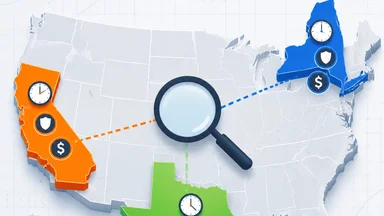
Catastrophe bonds that cover multiple perils must define a separate trigger for each one. For wind, the model uses 10-minute sustained wind speeds at a height of 10 meters, averaged over a grid of locations. The threshold is usually set at a return period of 10 to 20 years. Flood perils rely on rainfall accumulation thresholds over 24 to 72 hours, calibrated to river gauge data and digital elevation models. Storm surge is trickier: it depends on tide height at landfall, which must be predicted hours in advance.
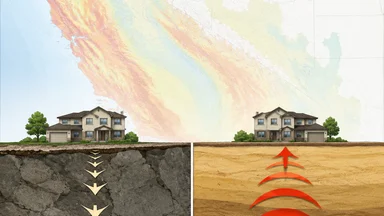
Earthquake triggers use peak ground acceleration (PGA) measured at seismic stations. The model converts PGA into a damage ratio for the building stock in the affected zone. Each peril has its own model run window, and each window can be affected by data availability. For wind, satellite data may take hours to process; for flood, rain gauge readings must be quality-controlled; for earthquake, seismic waveforms need to be reviewed for aftershocks.
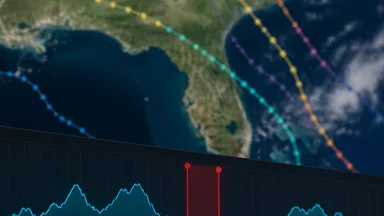
The Hurricane Ian bond covered all four perils, but the storm triggered only wind and flood. The model run for wind was delayed because the vendor was waiting for final wind speed data from the National Hurricane Center. The flood model run was on time, but the loss estimate fell below the trigger. The dispute centered on the wind model run, which was executed after the vendor received revised data—but after the window closed.
This fragmentation means that a bond can be partly triggered and partly not. The wind portion should have paid out, while the flood portion should not. But because the bond was structured as a single tranche, the entire payout was held up. Future bonds may need to separate perils into independent tranches with their own timestamps, though that would increase complexity and cost.
For the buyer, the takeaway is to scrutinize each peril's model calibration and run window separately. A bond that looks balanced across perils may hide a ticking clock in one of them.
Claims Handlers vs. Model Vendors: Who Controls the Clock?
When a catastrophe bond payout is disputed, the claims handlers at the sponsoring insurer must negotiate with the model vendor over the timing of the run. But the vendor has little incentive to be flexible: its model is proprietary, and the timestamp is a byproduct of its internal workflow. In the Ian case, the vendor refused to adjust the timestamp even after the sponsor pointed out that the input data had been revised.
AXA XL's new chief claims officer for the Americas, Matt Rodliff, who took the role in July 2026, has publicly stated that model vendor transparency is a priority for his team. Rodliff succeeds Jim DiVirgilio, who served for 18 years. In an interview with Carrier Management, Rodliff noted that “the timing of model runs is becoming a central issue in large-loss claims.” He did not comment on the Ian bond specifically, but his emphasis on “model run cutoff” definitions suggests that AXA XL is preparing for more such disputes.
Reinsurers are increasingly demanding that model vendors provide a timestamp log that shows exactly when each run started and finished, and what input data was used. But the vendors argue that their run schedules are proprietary, and that revealing them could compromise their competitive advantage. This tension has led to arbitration clauses that force mediation over time gaps, but arbitration can take months, as the Ian case showed.
The industry has no standard for a “model run cutoff” yet. Some market participants have proposed a 48-hour grace period after the formal window, during which a delayed run can still be used if the sponsor can show that the delay was beyond its control. Others want a dual-trigger mechanism that requires both a modeled loss and an actual loss estimate from claims data. But the latter approach would reintroduce the claims adjustment delays that parametric triggers were designed to avoid.
The balance of power between claims handlers and model vendors remains uneven. The vendors hold the data and the algorithms; the handlers hold the contracts. Until the contracts specify timestamps with the same rigor as they specify trigger thresholds, the clock will remain a source of friction.
The Allianz AI Cuts Signal a Shift in Claims Processing
In July 2026, Allianz SE announced plans to cut 1,500 to 1,800 positions at its Allianz Partners subsidiary in Europe, citing a push to adopt artificial intelligence solutions. The cuts, to be achieved through severance agreements and early retirements, reflect a broader trend in the insurance industry: automation of claims processing. AI models can run catastrophe scenarios faster than human analysts, and they can do so around the clock, potentially eliminating some timestamp issues.
But AI model timestamps raise new audit questions. If an AI model runs a catastrophe scenario in real time during the event, is that run considered to have occurred at the moment the data was ingested, or at the moment the output was generated? The difference could be minutes, but in a tight window, minutes matter. Moreover, AI models are often black boxes: their internal logic is not transparent, and their run timestamps may be difficult to verify independently.
Human adjusters are still needed for timestamp disputes. An AI model cannot negotiate with a bondholder or a model vendor over whether a delay was acceptable. The Allianz cuts may reduce the number of human adjusters, but the ones who remain will need deeper expertise in model mechanics and contract language. The technology does not eliminate the gap; it compresses it, making the remaining gap more consequential.
For reinsurance buyers, the shift to AI processing means that model run timing will become even more critical. If an AI model can run a scenario in seconds, the window for acceptable runs may shrink from 72 hours to 72 minutes. Buyers will need to ensure that their contracts specify not just the window length, but also the definition of a “run” in an AI context. The market is not there yet, but the Allianz cuts suggest it is moving in that direction.
Cyber liability policies face a similar challenge, where breach notification deadlines can hinge on when an attack was detected versus when it was reported. In both cases, the clock is a construct of the contract, not of the event. AI may change how fast the clock ticks, but it does not change the fact that the clock exists.
The Case for Model Run Windows: Why They Exist
Despite the risks, model run windows serve a purpose. They prevent sponsors from cherry-picking model runs after seeing the outcome. Without a fixed window, a sponsor could wait for multiple vendor runs and choose the one that triggers a payout, even if that run uses data that was not available immediately after the event. This would undermine the parametric trigger's objectivity.
Model vendors also need windows to manage their workflow. After a major catastrophe, demand for model runs spikes. Vendors prioritize runs based on contractual windows; without them, they would be flooded with requests and could not guarantee timely outputs. The window ensures that all bondholders are treated equally—everyone gets the same run, based on the same data, at the same time.
But the trade-off is rigidity. A window that is too tight can exclude valid runs, as the Ian case showed. A window that is too loose can be gamed. The industry is still searching for the right balance. Some have proposed dynamic windows that adjust based on data availability—for example, a 72-hour window that extends to 96 hours if the vendor can show that key data was delayed. This would preserve objectivity while allowing flexibility.
Another idea is to use a reference model run, agreed upon in advance, that serves as the sole trigger. If the reference model is unavailable, a backup model is used. This would eliminate disputes over which run to use, but it would also concentrate risk on a single model. If that model has a flaw, the entire bond could be affected.
For reinsurance buyers, the key is to understand that windows are not arbitrary. They are a feature, not a bug. But like any feature, they need to be calibrated to the real-world constraints of data collection and model execution. Buyers should ask: what happens if the data is late? What happens if the vendor's system crashes? The contract should answer these questions before a storm hits.
Three Practical Takeaways for Reinsurance Buyers
First, negotiate the model run window length explicitly. A 72-hour window may sound generous, but if the vendor's standard practice is to run models once per day, the effective window may be much shorter. Ask the vendor for its typical run schedule and build that into the contract. If the vendor runs models only at 8 a.m. and 8 p.m. UTC, a storm that ends at 7 a.m. may have only one chance to trigger the model before the window closes.
Second, require the model vendor to provide a timestamp log as part of the claims documentation. This log should include the start and end time of each run, the version of the model used, and the input data sources. Without this log, the sponsor has no way to prove that a run was timely, and bondholders have no way to verify it. The log should be auditable by a third party.
Third, consider building a “grace period” into the bond documentation that allows for alternative model runs if the primary one is delayed due to data availability issues. The grace period could be 24 to 48 hours, during which the sponsor can submit a run from a different model vendor or a revised run from the same vendor. This would reduce the risk of a payout being blocked by a minor timestamp discrepancy.
Another option is to use a dual-trigger bond that requires both a parametric model run and an actual loss estimate from claims data. This approach adds complexity but reduces the reliance on a single timestamp. The disability income claim gap caused by occupational class code reclassification shows how a single trigger can be gamed or misinterpreted. A dual trigger provides a check.
Legal counsel should review timestamp definitions now, not after a storm. The Ian case is a warning that even well-drafted bonds can fail on a technicality. As the market grows and more capital is deployed in catastrophe bonds, the cost of a timestamp gap will only increase. Buyers who act now to tighten their contract language will be better protected when the next hurricane hits.
This article is for informational purposes only and does not constitute professional advice. Readers should consult their own legal and insurance advisors before making any decisions based on the content.