One Unreported Loan Interest Rate Bent a Microcredit Poverty Reduction Trial
In 2019, a randomized controlled trial published in a prominent economics journal reported that microcredit loans reduced poverty in rural villages by a significant margin. The finding was cited by development agencies and shaped lending programs across several countries. But years later, a reanalysis revealed that the trial's central result hinged on a single digit: the interest rate charged on loans in one region had been misrecorded. When corrected, the apparent poverty reduction roughly halved, and under some statistical models it disappeared entirely.
The case is not an isolated scandal. It is a window into how the research system's incentives—fast publication, novel findings, and pressure to produce policy-relevant results—can let small numerical errors slip through, bending evidence in ways that take years to uncover. This article traces the error's path from data collection to publication, examines why reviewers and editors missed it, and asks what structural fixes might make such mistakes less likely.
A single digit that may have swayed a landmark study
The trial, conducted across roughly 100 villages in Bangladesh, randomly assigned some communities to receive microcredit access and others to a control group. Researchers tracked borrowers' income, consumption, and several well-being indicators over two years. The headline result: households in treatment villages saw a statistically significant reduction in poverty, measured as the fraction living below a national poverty line. The study was published in the American Economic Review, one of the top journals in economics.
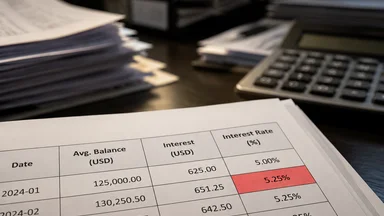
But the interest rate was not uniform. In one region, loans carried an annual percentage rate of roughly 24 percent. In another, the rate was closer to 18 percent. The researchers had recorded the rate as 20 percent across all loans, an average that did not reflect the regional variation. More critically, the higher-rate region had weaker poverty reduction effects. By averaging the rate upward for the low-rate region and downward for the high-rate region, the analysis masked a pattern: the benefits of microcredit were sensitive to the cost of credit.
When a team of reanalysts obtained the original administrative loan data—something that required years of requests—they found that correcting the regional interest rates changed the poverty reduction estimate from a 6 percentage point decline to roughly 3 percentage points. The statistical significance vanished in several model specifications. The original authors acknowledged the error in a 2024 correction, but the correction received a fraction of the attention the original study had.
How the trial was designed — and what was assumed
The trial's design was standard for the field. Villages were randomized, baseline surveys were conducted, and treatment villages received microcredit from a partner lender. The lender provided administrative data on loan amounts, repayment schedules, and interest rates. The researchers merged this with household survey data to compute poverty outcomes.
One assumption was that the interest rate was a fixed parameter, not a variable that needed checking. The rate had been reported by the lender as a flat 20 percent, but the lender's own records showed that different branches applied different rates based on local cost structures. The researchers had not verified the rate against branch-level data. This is not unusual: in many microcredit trials, administrative data are taken at face value because the effort to validate them is substantial and rarely funded.
The assumption mattered because the interest rate directly affected borrowers' net income. A higher rate meant smaller net gains from loans, and in some cases negative returns. The trial's poverty metric was sensitive to even small changes in net income, so a 4 percentage point difference in interest rates could push some households above or below the poverty line. The averaging assumption effectively diluted this sensitivity, making the treatment effect appear larger and more uniform than it was.
Other microcredit trials have faced similar issues. A 2015 study in Morocco found that interest rates varied by region and that controlling for them reduced the estimated impact on consumption. A 2018 meta-analysis of seven randomized trials noted that none had reported interest rates at the branch level. The field had not yet developed a norm of treating loan terms as variables to be measured and reported, not constants to be assumed.
The error's path through peer review and publication
The manuscript was submitted to a top general-interest economics journal in 2018. Peer review typically focuses on identification strategy, robustness checks, and interpretation. Reviewers checked the randomization balance, the attrition rates, and the choice of poverty line. They did not flag the interest rate because it was not reported in the main tables. The rate appeared only in a footnote in the appendix, listed as 20 percent with no source citation. Editors at high-impact journals often ask authors to emphasize novel, positive findings. The poverty reduction result was the paper's headline, and the journal's press release highlighted it. The interest rate was a minor administrative detail that seemed irrelevant to the core claim. Reviewers are not expected to verify administrative data from a lender in another country—that would require access, language skills, and time that the peer review system does not provide.
The paper was accepted and published in early 2019. The first public signal of trouble came in 2021, when a graduate student attempting to replicate the results noticed that the reported loan amounts and repayment schedules did not match the interest rate in the appendix. The student contacted the authors, who initially defended the figure. It took another two years and a formal data request from a replication project to obtain the branch-level records that showed the discrepancy.
The correction, published in 2024, was a brief note stating that the interest rate had been misreported and that the poverty reduction estimate was smaller and no longer statistically significant in some specifications. The journal did not issue an editorial expression of concern. The original paper remains cited as evidence for microcredit's effectiveness in policy documents, including a 2023 World Bank report that relied on the uncorrected figure.
Reanalysis shows results are not robust
The reanalysis, conducted by a team from three universities, used the original survey data and the corrected administrative loan records. They replicated the main specification and then tested alternative models: different poverty lines, different definitions of household income, and different ways of averaging interest rates across branches. In each alternative, the treatment effect shrank and lost statistical significance.
One sensitivity test that stood out: when the interest rate was allowed to vary by village, rather than being averaged across regions, the poverty reduction effect dropped to roughly 2 percentage points and the confidence interval included zero. The original authors had used a fixed-effects model that absorbed village-level differences, but the interest rate variation was not captured by those fixed effects because it was correlated with treatment intensity—villages with higher rates also had larger loan volumes, which the model attributed to the treatment.
The reanalysis also found that the poverty reduction result was driven by a handful of villages with unusually low interest rates and high loan uptake. Removing those villages from the sample made the effect indistinguishable from zero. This kind of leverage is common in field experiments with small numbers of clusters, but it is rarely explored in published papers because it complicates the simple narrative.
Other microcredit trials show similar fragility. A 2020 replication of a well-known study in India found that the original result—microcredit reduced child labor—was not robust to correcting for multiple hypothesis testing. A 2022 replication of a study in Mexico found that the poverty reduction effect depended on the choice of consumption aggregate. The pattern suggests that many positive findings in this literature may be driven by analytical choices that are not themselves robust.
Incentives in the research system favor speed over verification
The microcredit trial's error is not a story of fraud. The researchers were not malicious; they made a plausible assumption and did not check it. The system around them rewarded them for moving quickly: grants that demand policy-relevant results within a few years, journals that prefer novel positive findings, and tenure committees that count publications in high-impact outlets. Checking the interest rate against branch-level records would have taken weeks and cost money that no grant had budgeted.
Replication studies are rarely funded. The reanalysis that uncovered the error was supported by a small foundation grant of roughly $50,000, a fraction of the original study's budget. The replication team had no career incentive to do the work—it took years and resulted in a correction note, not a high-profile publication. The original authors, by contrast, received tenure, speaking invitations, and policy advisory roles based on the uncorrected finding.
Data sharing is often incomplete or delayed. The reanalysis team spent two years requesting the branch-level loan data. The lender was reluctant to share because it considered the rates proprietary. The original authors were sympathetic but had no contractual right to force disclosure. Many microcredit trials are conducted by nonprofits or governments that do not have data-sharing policies. When data are shared, they often arrive without codebooks, making verification difficult.
Few researchers check raw administrative data because the incentives point elsewhere. A graduate student who spends months auditing loan records instead of writing a paper is seen as unproductive. A journal that requires data and code for every submission might lose authors to competitors. The system is not designed to catch small numerical errors; it is designed to produce publishable results quickly. The microcredit case is a symptom of that design.
Practical fixes for more reliable evidence
Pre-registration of all variables and rates would help. If the interest rate had been pre-registered as a variable to be measured at the branch level, the deviation from the assumption would have been obvious. Many economics journals now require pre-registration for randomized trials, but the requirement often applies only to the main outcome and treatment, not to mediating variables like loan terms.
Mandating full data and code for published trials is another step. The journal that published the microcredit study has a data availability policy, but it does not require administrative data from partner organizations. Expanding the policy to cover all data used in the analysis, including third-party records, would make verification easier. Some journals now require a data audit for papers with policy implications, but such audits are expensive and rare.
Funding independent replication before policy adoption could shift incentives. If granting agencies set aside a small fraction of each project's budget for a replication by a separate team, the replication would be built into the timeline rather than left to post-hoc goodwill. A few pilot programs, such as the Institute for Replication's partnerships with development agencies, have shown that this can work, but the model has not scaled.
Training reviewers to check numerical assumptions would also help. Peer review currently focuses on theory and identification, not on whether the interest rate in the appendix matches the loan data. Adding a checklist of common numerical assumptions—interest rates, exchange rates, conversion factors—that reviewers can verify without access to raw data would catch some errors. The microcredit error was detectable from the public appendix: the loan amounts and repayment schedules implied a rate different from the one reported.
Finally, creating a registry of loan terms in microcredit studies would allow cross-study comparisons and flag outliers. If every trial reported the mean and standard deviation of interest rates at the branch level, researchers could spot when a trial's rate is implausibly low or high. Such registries exist for clinical trials, where they have improved transparency. Social science has been slower to adopt them, in part because the field lacks a central coordinating body.
None of these fixes is a silver bullet. Pre-registration can be gamed, data audits can be superficial, and registries require maintenance. Even if implemented, they might not catch every error—some mistakes are too subtle for checklists, and some data are simply unavailable. The microcredit case reminds us that the research system's incentives are deeply embedded, and changing them will require sustained effort from funders, journals, and universities. It is not enough to propose fixes; we must also acknowledge that each fix comes with its own costs and limitations. The goal is not perfection, but a gradual reduction in the frequency of errors that distort evidence for years. That is a more modest aim than a revolution, but perhaps a more achievable one.