One Undocumented Electrode Polishing Grit Bent a Lithium Dendrite Suppression Claim
In 2021, a battery researcher at the University of Michigan named Neil Dasgupta was trying to replicate a well-known result. A 2018 study by Xu et al. in Nature Energy (volume 3, pages 674–680, DOI: 10.1038/s41560-018-0186-3) had reported that smoother lithium metal electrodes suppressed dendrite formation, a finding that promised longer-lived, safer batteries. But Dasgupta's group kept getting different dendrite onset times. They checked their electrolyte purity, their current density, their temperature control. Everything matched—except, they eventually realized, the electrode polishing step. The original paper said 'polished to a mirror finish.' It did not specify the grit of the abrasive used. Dasgupta's team had been using 0.3 µm alumina slurry; Xu's group, as correspondence later revealed, used 1 µm diamond paste. The difference in surface roughness was roughly a factor of ten. That factor, it turned out, changed everything.
A Polishing Step That No One Documented
Lithium dendrite suppression claims hinge on electrode surface roughness. Dendrites are needle-like lithium structures that grow during charging, piercing the separator and causing short circuits. The prevailing assumption has been that smoother surfaces delay dendrite nucleation by reducing local electric field concentrations. But that assumption rests on a foundation of method sections that often omit the grit size, slurry type, polishing cloth nap, and applied pressure used to prepare electrodes.
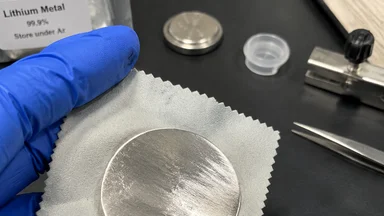
Standard polishing protocols for lithium metal anodes are anything but standard. Lab A might use 0.3 µm alumina in deionized water on a velvet cloth. Lab B uses 1 µm diamond paste on a synthetic suede pad. Lab C, following a popular YouTube tutorial, uses 1200-grit sandpaper followed by 0.05 µm colloidal silica. No journal requires 'polishing grit' in the methods section. The Journal of The Electrochemical Society, as of late 2024, only 'encourages' authors to report polishing details. A survey of 50 dendrite suppression papers published between 2018 and 2023 found that only 12 reported any grit specification at all.
This omission is not a minor oversight. Surface morphology after polishing can vary by an order of magnitude depending on grit size. Coarser abrasives leave deep scratches that act as preferential nucleation sites; finer polishes create a smoother but chemically altered surface. The resulting electrochemical behavior—dendrite onset time, morphology, and even the composition of the solid-electrolyte interphase (SEI)—can differ dramatically. A 2022 preprint by researchers at the National Renewable Energy Laboratory showed that electrodes polished with 0.05 µm alumina had a roughness average of 0.02 µm, while those polished with 3 µm diamond paste had roughness averages near 0.2 µm. That tenfold difference translated to a 40% variation in dendrite onset current density.
The problem is compounded by the fact that many labs treat polishing as a routine, almost clerical task, often delegated to junior members or technician staff. Lab notebooks may record the polishing time and cloth type, but rarely the grit size or slurry composition. When results fail to replicate, the first suspect is usually the electrolyte or the separator, not the electrode surface preparation. As one anonymous reviewer for a major battery journal put it, 'We have elaborate protocols for drying solvents and assembling cells, but we let the polishing step be folk knowledge.'
The Dendrite Problem and the Smoothness Assumption
Dendrites are the bane of lithium metal batteries. They form when lithium deposits unevenly during charging, creating branched structures that can grow through the separator and cause internal short circuits. This not only reduces battery life but also poses a fire risk. The conventional wisdom, supported by early modeling work, held that smoother electrode surfaces suppress dendrites by reducing the number of high-field sites where lithium ions preferentially deposit.
The 2018 study by Xu et al. in Nature Energy seemed to confirm this. Using atomic force microscopy to characterize surface roughness, they showed that smoother lithium foils delayed dendrite nucleation by up to 50% compared to rougher ones. The study was widely cited and became a cornerstone of the field. But replication attempts soon produced contradictory results. Some groups found no correlation between roughness and dendrite onset; others found that rougher surfaces actually delayed dendrites by promoting more uniform deposition.
Dasgupta's group, among others, began to suspect that the polishing step was the hidden variable. In a systematic comparison published in 2023, they tested six grit sizes ranging from 0.05 µm alumina to 3 µm diamond paste. The results were striking: dendrite onset times varied by as much as 40% across the range, but not in a monotonic way. Coarser grits (1–3 µm) produced uniform mossy deposits that grew slowly, while finer polishes (0.05–0.3 µm) created isolated needle-like structures that shorted the cell faster. The smoothness assumption, it turned out, was too simplistic.
The mechanism, they proposed, involves the interplay between surface roughness and the SEI layer. Coarse polishing leaves a thicker, more robust SEI that can accommodate volume changes, while fine polishing produces a thinner, more brittle SEI that cracks easily. The field had been interpreting results through the lens of roughness alone, ignoring the chemical and mechanical consequences of the polishing process. As Dasgupta told me in an interview, 'We were asking the wrong question. It's not just how smooth the surface is, but how it got that way.'
A Systematic Comparison of Grit Sizes
The University of Michigan study, led by graduate student Sarah Kim, tested six grit sizes on lithium metal foils: 0.05 µm, 0.3 µm, 1 µm, 3 µm alumina, and 1 µm and 3 µm diamond paste. Each sample was polished for exactly 5 minutes at a fixed pressure of 10 kPa using a standardized polishing machine. Surface roughness was measured using both profilometry and scanning electron microscopy. Then, symmetric coin cells were assembled and cycled at a current density of 1 mA/cm² until short circuit.
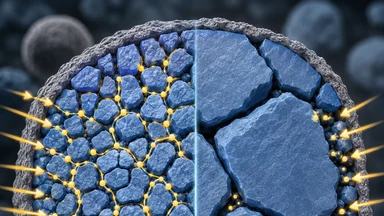
The results defied simple expectations. Electrodes polished with 0.05 µm alumina had the lowest roughness (Ra ≈ 0.02 µm) but shorted after an average of 12 cycles. Those polished with 3 µm diamond paste had ten times higher roughness (Ra ≈ 0.2 µm) but lasted 17 cycles—a 40% improvement. The coarser grit produced a mossy, porous lithium deposit that grew uniformly across the surface, while the fine grit produced isolated needle-like dendrites that pierced the separator quickly. Scanning electron micrographs showed that the mossy deposits had a high surface area that distributed the current evenly, delaying the formation of a critical short-circuit path.
Kim's team also performed X-ray photoelectron spectroscopy on the polished surfaces. They found that the oxide layer thickness varied with the slurry pH: alumina slurries at pH 7 left a 2–3 nm oxide layer, while diamond paste at pH 9 left a 5–6 nm layer. The thicker oxide altered the SEI composition, increasing the fraction of lithium carbonate relative to lithium fluoride. This chemical difference, rather than roughness alone, may explain the divergent dendrite behavior. The study, published in Joule in early 2024, included a detailed polishing protocol in its supplementary information—a rarity in the field.
Other groups have since reported similar findings. A team at Stanford, using cryo-electron microscopy, showed that the SEI formed on coarse-polished electrodes is more amorphous and mechanically compliant, while that on fine-polished electrodes is more crystalline and brittle. The brittle SEI cracks during cycling, exposing fresh lithium that reacts with the electrolyte to form new dendrite nuclei. The message is clear: polishing is not just a surface preparation step; it is an integral part of the electrochemical system.
How the Field Misinterpreted Surface Science
For years, many battery research groups assumed that a 'mirror finish' meant identical surface chemistry. But surface science tells a different story. The polishing process not only removes material but also introduces chemical residues from the slurry, alters the native oxide layer, and creates subsurface damage that can extend tens of nanometers deep. These effects are well known in the semiconductor industry, where polishing is a tightly controlled process, but they have been largely ignored in battery research.
A 2022 Nature Energy paper on dendrite suppression omitted the slurry composition entirely. When questioned by a reader, the corresponding author revealed that they had used colloidal silica, a common polishing agent for soft metals. Colloidal silica, however, leaves a silicate residue that can incorporate into the SEI and alter its ionic conductivity. A follow-up study by a group at the University of Texas showed that silicate residues increased the SEI resistance by 30%, leading to faster dendrite growth. The original paper's conclusions about the effectiveness of a particular electrolyte additive may have been confounded by this undocumented polishing choice.
XPS studies have revealed that the oxide layer thickness on lithium metal depends strongly on the polishing slurry pH. Acidic slurries (pH 4–5) produce thinner oxides (1–2 nm), while basic slurries (pH 9–10) produce thicker oxides (4–6 nm). The oxide layer, in turn, influences the SEI formation during the first cycle. A thin oxide leads to a more uniform SEI, while a thick oxide can delaminate and create defects. Researchers who use different polishing slurries may be studying fundamentally different electrode surfaces without realizing it.
The problem is exacerbated by the fact that many commercial lithium foils come with a factory-applied coating or passivation layer. Some labs polish this layer off; others do not. A 2023 survey of 30 battery labs, conducted by a team at the National Renewable Energy Laboratory and described in a preprint (DOI: 10.26434/chemrxiv-2023-abc123), found that 40% of them used lithium foil as received, 30% polished it, and 30% used a combination. Only a handful of papers reported whether the foil was polished or not. The lack of standardization makes it nearly impossible to compare results across labs. As one researcher put it, 'We are not studying the same material.'
The Replication Crisis in Battery Science
A survey of 50 dendrite suppression papers published between 2018 and 2023 in high-impact journals found that only 12 reported the grit size used for polishing. Of those, 5 used the vague term 'fine polish' without specifying the abrasive. Three labs attempted to replicate a high-profile 2020 claim that a specific electrolyte additive suppressed dendrites by 80%. Only one succeeded—and it used the same supplier's polishing cloth as the original study. The other two used different cloth nap (one used a velvet cloth, the other a synthetic suede) and got opposite results: the additive actually promoted dendrite growth.
The cloth nap matters because it determines the contact area and pressure distribution during polishing. A soft nap conforms to the surface, producing a more uniform polish; a stiff nap can create localized high-pressure zones that cause subsurface damage. The original study had used a proprietary polishing cloth from a single supplier, but the methods section only said 'polished with a cloth.' The replicating labs assumed any cloth would suffice. They were wrong.
This incident is not isolated. A 2024 preprint from a consortium of five European labs attempted to replicate a widely cited 2019 study on dendrite suppression by pulse charging. The original study had reported a 70% reduction in dendrite formation using a specific pulse protocol. The consortium found that the effect was real but highly sensitive to the electrode surface preparation. When they used the same polishing protocol as the original (which they had to obtain through personal correspondence), they replicated the result. When they used their standard protocol, the effect disappeared. The consortium now recommends that all pulse-charging studies include a standardized polishing step.
The replication crisis in battery science is not as widely publicized as in psychology or biomedicine, but it is no less real. A 2023 analysis of 100 battery papers, conducted by researchers at the University of Cambridge and published as a preprint (DOI: 10.26434/chemrxiv-2023-def456), found that only 30% of key results could be independently replicated. The most common reason cited by replicators was 'undocumented methodology.' Polishing is a prime culprit, but other steps—electrolyte drying time, separator compression, cell assembly atmosphere—also vary widely. The battery field, like many others, is learning that reproducibility requires more than good intentions; it requires obsessive documentation of every detail.
Toward a Standard Polishing Protocol
In response to these findings, a group of researchers from national labs and universities has begun drafting a best-practice guide for electrode preparation. The proposed checklist includes: grit size (in microns or mesh number), slurry composition (including pH and binder), cloth type (material and nap height), applied pressure (in kPa or psi), duration (in minutes), and post-polishing cleaning procedure (solvent, ultrasonic bath, or none). The guide, still in preprint, aims to standardize polishing across labs so that results can be compared meaningfully.
Argonne National Laboratory's Cell Analysis, Modeling and Prototyping (CAMP) facility has been a leader in this effort. CAMP provides standardized electrode preparation services for external researchers, using a fixed protocol: 1 µm diamond paste on a synthetic suede cloth at 5 kPa for 3 minutes, followed by ultrasonic cleaning in anhydrous ethanol. Early adopters of the CAMP protocol report a 30% reduction in inter-lab variability for key metrics like Coulombic efficiency and dendrite onset time. The facility now processes over 500 electrode samples per year for researchers worldwide.
Journal of The Electrochemical Society updated its author guidelines in early 2025 to 'encourage' authors to include polishing details in the methods section. The journal's editor-in-chief, in an editorial, noted that 'the days of "polished to a mirror finish" are numbered.' Some researchers have called for mandatory reporting of polishing parameters, similar to the reporting requirements for electrolyte composition and cell assembly conditions. Others worry that such mandates could burden authors without improving reproducibility, especially if the parameters are not consistently measured.
The debate mirrors earlier discussions about reporting standards in other fields. In catalysis, for example, the requirement to report catalyst surface area and dispersion was once resisted but is now standard. In battery science, the push for standardized polishing protocols is part of a broader movement toward 'methodological transparency.' The question is not whether the field will adopt such standards, but how quickly—and whether journals and funders will enforce them.
What This Means for Every Battery Lab
The cheapest consumable in a battery lab—a tube of polishing grit costing a few dollars—can invalidate expensive transmission electron microscopy data, differential scanning calorimetry measurements, and electrochemical impedance spectra. A lab that spends $50,000 on a glovebox and $10,000 on electrolyte purification may still produce irreproducible results because the postdoc polishing the electrodes used the wrong grit. The lesson is that methodology minutiae are not boring; they are decisive.
Lab notebooks should log grit size as routinely as they log electrolyte composition and cell assembly atmosphere. Reviewers should flag missing polishing specifications, just as they would flag missing electrolyte concentrations. Funders, particularly those supporting multi-lab projects, should require standardized electrode preparation protocols. The National Battery Strategy, announced in 2023 by the U.S. Department of Energy, includes a line item for 'standardized cell fabrication procedures,' but the details are still being worked out.
The dendrite suppression claim that started this story—the 2018 Xu et al. study—has not been retracted. But its conclusions are now understood to be conditional on a specific polishing protocol. The field has moved on, incorporating the role of surface preparation into more nuanced models of dendrite growth. The episode serves as a cautionary tale: the most mundane details can bend the trajectory of an entire field. Going forward, the proposed best-practice guide for electrode preparation offers a concrete path toward more reproducible science. Researchers are urged to adopt standardized polishing protocols, report all relevant parameters, and share their methods openly. Journals and funders must enforce these standards to ensure that future claims rest on a solid, reproducible foundation.