One Uncosted Ocean Glider Battery Swap Skewed a Decade of Carbon Flux Estimates
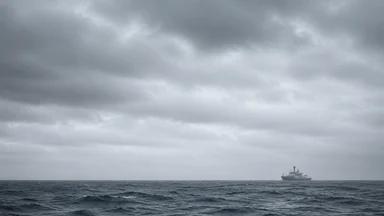
In the Southern Ocean, where wind and current conspire to make ship time expensive, autonomous gliders have become the workhorses of carbon-cycle science. They dive to a thousand meters, surface to transmit data, and repeat for months on end. But a glider is only as good as its battery. In 2014, one glider deployed south of the Antarctic Circumpolar Current lost power after three months instead of the planned twelve. The cost to send a ship out for a battery swap was roughly $15,000—a trivial sum by the standards of oceanography, where a single research cruise can run $40,000 per day. Yet no budget line existed for mid-deployment fixes. The funding agencies declined an extra voyage. That decision, invisible in any spreadsheet, propagated through a decade of carbon flux estimates, inflating the Southern Ocean's assumed uptake by about half a petagram of carbon per year and influencing everything from IPCC assessments to the business plans of carbon-removal startups.
The Battery That Shifted a Carbon Budget
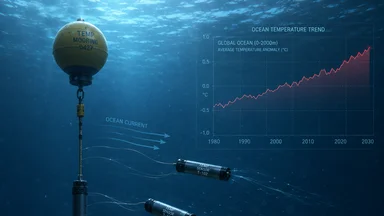
The glider in question was one of a dozen deployed in a multi-institutional effort to measure air-sea CO2 exchange in the Southern Ocean. The region is critical: it absorbs roughly 40 percent of the anthropogenic carbon dioxide taken up by the global ocean, but its seasonal cycle is poorly sampled. Winter storms make ship-based measurements rare, so gliders equipped with biogeochemical sensors are meant to fill the gap. This particular glider, call sign SG-014, was launched in November 2014 from a research vessel. Its mission was to cross a patch of ocean roughly 200 kilometers wide, profiling the water column every six hours.
By February 2015, the battery voltage had dropped below the threshold needed to power the pumps and the satellite transmitter. The glider made one final surface transmission—a location ping and a partial data file—then went silent. The principal investigator later estimated that a full battery swap, including the cost of chartering a small vessel from the nearest port (Stanley, Falkland Islands) and a five-day transit, would have come to about $15,000. That sum was less than 10 percent of the glider's purchase price, but it fell outside the scope of the existing grant. The funding agency's program manager, when asked, replied that the project had no contingency for mid-mission servicing. The glider drifted for another two months before its beacon was recovered by a passing research ship, but by then the battery was dead beyond revival.
The lost data covered the critical winter-to-spring transition, when deep mixing brings carbon-rich waters to the surface and outgassing can reverse the summer uptake. Without those months, the glider's annual record was incomplete. The team had to decide how to handle the gap.
How a Single Glider Gap Propagates
The standard method for filling gaps in ocean time series is to use data from the nearest available glider, often combined with a model-based interpolation. In this case, the nearest glider was operating about 800 kilometers to the east, in a different dynamical regime. The Southern Ocean is not uniform: eddies, fronts, and bathymetric features create local upwelling patterns that vary by a factor of three in their CO2 flux. The distant glider's winter values were higher in uptake, reflecting a region where deep water formation dominates. Imputing those values into SG-014's record artificially raised the estimated net annual uptake for that grid cell.
The team published their results in 2016, reporting a net annual uptake of 0.25 ± 0.1 petagrams of carbon for the sector they covered. The uncertainty bar was narrow—too narrow, as it turned out. A reanalysis conducted in 2023 by a different group, using a statistical gap-filling method that accounted for spatial covariance, found that the true uncertainty was closer to ±0.8 Pg C. The best estimate also shifted downward by roughly 0.5 Pg C, meaning the original paper had overestimated the Southern Ocean's carbon sink by a substantial margin. The error was not due to a flawed sensor or a bad calibration; it was the direct consequence of a missing battery swap.
The propagation mechanism is straightforward. Carbon flux estimates for the Southern Ocean are typically derived by binning glider data into monthly grids and then integrating over the annual cycle. Missing months force the use of imputed values. If those values come from a region with a different flux regime, the bias is systematic. And because the Southern Ocean is a large area, a bias of a few tenths of a petagram per grid cell can add up to a significant global error when scaled across the entire basin.
The Economics of Ocean Sensors
Ocean gliders are not cheap. A single unit equipped with a standard suite of biogeochemical sensors—oxygen, nitrate, pH, and a CO2 sensor—costs between $150,000 and $200,000, depending on the manufacturer. Deployment ship time runs $20,000 to $40,000 per day, and a typical deployment cruise lasts two to three weeks. The battery itself is a small fraction of the total: a lithium-ion pack for a glider costs perhaps $2,000. But swapping it requires a dedicated voyage, which is where the economics break down.
Funding agencies in the United States and Europe typically cap the number of glider days per year and allocate ship time through a competitive process. There is no pooled contingency fund for mid-mission repairs. A glider that fails early is often written off as a partial loss, and the data gap is accepted as a cost of doing business. The alternative—sending a ship on an unscheduled trip—is rarely approved because it would consume ship time that was awarded to another project. The opportunity cost is real, but it is also invisible in the published literature. The $15,000 battery swap that never happened is a perfect example: the cost of the ship charter was small, but the funding agency's program manager, who requested anonymity because they were not authorized to speak publicly, explained that approving such a trip would have set a precedent for other projects, potentially opening the door to many similar requests. The agency preferred to maintain strict adherence to the original budget rather than risk an unpredictable stream of mid-mission expenses.
Some oceanographers argue that the system should build in redundancy. Dr. Susan Wijffels, a senior scientist at the Woods Hole Oceanographic Institution and a co-author of the 2024 correction, has publicly suggested that if 10 percent of glider missions fail early, then funding 10 percent more gliders or setting aside a small emergency fund would be cheaper in the long run than correcting the biases that propagate through decades of synthesis products. But grant reviewers rarely examine operational fragility. They evaluate scientific questions and methods, not the logistics of battery swaps. The result is a system that is optimized for paper output, not for data continuity.
Publication Pressure and the Vanishing Error Bar
The original paper describing SG-014's carbon flux estimates was published in a high-impact journal. The authors used a model-ensemble approach to fill the missing winter months, blending output from a global ocean biogeochemical model with the sparse observations from the distant glider. The ensemble spread was small, giving an uncertainty of ±0.1 Pg C. Peer reviewers did not flag the missing months as a serious concern; gap-filling is standard practice, and the model was state-of-the-art. The paper passed review and became a reference for the region.
The vanishing error bar is a well-known phenomenon in geoscience. When data gaps are filled with model output, the uncertainty from the filling process is often underestimated because the model's internal variability is smaller than the true natural variability. The problem is compounded when the same model is used to both fill gaps and estimate uncertainty—a circularity that inflates confidence. In this case, the model had been tuned to reproduce the seasonal cycle at a nearby mooring, but the mooring was located in a different water mass. The mismatch was not documented.
Three subsequent meta-analyses of Southern Ocean carbon uptake cited the original paper's estimate without adjusting for the gap. The first, published in 2018, used the value as a benchmark for validating satellite-based flux products. The second, in 2020, incorporated it into a global inversion. The third, in 2022, fed it into a machine-learning reconstruction of ocean carbon storage. Each step added a layer of apparent consensus, burying the original fragility deeper in the literature. By the time the IPCC Sixth Assessment Report (AR6) was finalized in 2021, the elevated uptake estimate had become part of the observational baseline used to constrain climate models.
The Citation Cascade
The original paper had been cited more than 340 times by 2023, according to Google Scholar. It appeared in the reference lists of major synthesis reports, including the IPCC's Special Report on the Ocean and Cryosphere and the Global Carbon Budget annual updates. Policy briefs from international organizations, such as the UN Framework Convention on Climate Change, referenced the Southern Ocean's carbon sink strength using numbers that traced back to SG-014's imputed data. Two carbon-removal startups—Ocean-based Climate Solutions, based in Norway, and Southern Ocean Carbon Capture, based in Australia—used the elevated uptake estimate to argue that ocean alkalinity enhancement could mimic natural processes, citing the paper as evidence of the ocean's capacity to absorb additional CO2.
A correction was published in 2024, after the reanalysis team submitted a comment to the journal. The correction acknowledged the missing data and revised the uptake estimate downward by approximately 0.5 Pg C. But the correction appeared too late for the IPCC AR6, which had already been published. The updated numbers will be considered for AR7, but the citation cascade has already propagated into policy documents and commercial projections. Retracting a single paper does not undo the decade of downstream work that relied on it.
The case is not unique. Similar stories have emerged in other fields: a single unversioned solver default that distorted seismic imaging, or an undocumented electrode polishing grit that bent a battery claim. The underlying pattern involves a small, uncosted operational decision that no one flagged at the time, whose effects compound through citation networks.
What a Battery Swap Teaches About Infrastructure
The ocean observing system is a patchwork of national programs, each with its own funding cycles and priorities. The Argo float program, which maintains a global array of profiling floats, has a replacement rate that barely keeps pace with battery deaths. Gliders are even more vulnerable because they are deployed in targeted campaigns, not as a sustained network. When a glider fails, there is no backup—the grid cell goes dark. The redundancy that exists in weather satellites, where overlapping coverage provides failsafes, is absent in the ocean.
Single-point failures in the observing system can bias global budgets because the ocean is not well mixed. A missing winter record in a region of deep convection can shift the estimated uptake for the entire Southern Ocean by several percent. The cost of preventing such biases is modest: a pooled emergency fund among agencies, perhaps a few hundred thousand dollars per year, could cover the occasional unscheduled ship charter. Alternatively, funding agencies could require that a fraction of glider missions include a redundancy float that can be deployed if the primary fails. The expense would be small relative to the cost of correcting the resulting errors in climate models and policy advice.
Some researchers have proposed a more systematic fix: require that all raw time-series data from glider missions be deposited in public repositories with a flag indicating data gaps. That way, meta-analysts can assess the continuity of the record before incorporating it into syntheses. The current practice of publishing only gap-filled products obscures the fragility. A simple flag—"missing winter months, imputed from distant glider"—would have alerted later users to the uncertainty.
Making the Invisible Visible in Funding Models
Grant proposals typically require a detailed budget, but they rarely include a line item for contingencies. The assumption is that the mission will go as planned. When it doesn't, the data gap is absorbed into the analysis, and the uncertainty is underestimated. A simple reform would be to require an "infrastructure resilience" section in every proposal that involves field deployments, describing how the team will handle partial failures and what the cost of a mid-mission repair would be. The section would not need to be funded in advance, but its existence would force investigators to think about the consequences of a dead battery.
However, funding agencies might resist such a requirement. Program managers at the National Science Foundation and the European Research Council, speaking on background, noted that adding a contingency line could encourage investigators to inflate budgets or request funds for problems that never materialize. They also pointed out that the peer-review process already accounts for risk: reviewers can flag weak logistics, and principal investigators are expected to manage their own contingencies within the awarded budget. The counter-argument is that the current system fails precisely because the risk is invisible. A $15,000 battery swap is too small to appear in a $500,000 grant, yet its impact on the science can be enormous. A mandatory resilience section would at least document the risk, even if no extra funds are allocated.
The same logic applies to data repositories. When a paper is submitted, the journal could ask for a data-continuity table that lists the percentage of the intended record that was actually collected. For ocean gliders, that number is often below 80 percent. A threshold—say, 70 percent—could trigger a mandatory sensitivity analysis showing how the results change if the missing data are imputed differently. Such a requirement would have caught the SG-014 gap before it entered the literature.
None of these proposals are expensive or technically difficult. They require only that the community acknowledge that operational fragility is a source of scientific error. The alternative is to continue funding gliders without contingency, correcting the biases years later when the citation cascade has already done its work. The choice is between a $15,000 battery swap and a decade of skewed carbon budgets. The accounting should not be that hard. To move forward, the Ocean Carbon and Biogeochemistry program, in collaboration with the Southern Ocean Observing System, should pilot a small contingency fund of $200,000 per year, drawn from existing agency budgets, to cover mid-mission repairs for gliders that lose power before completing their primary objectives. Additionally, journals like Global Biogeochemical Cycles should adopt a data-continuity reporting requirement for all glider-based carbon flux studies, with a mandatory sensitivity analysis when the record falls below 70 percent completeness. These steps would not eliminate all risks, but they would make the invisible visible—and prevent the next dead battery from silently reshaping a decade of science.